-
We detected your language preference as English. Would you like to switch to the English version for a better experience?
Switch to English
Stay here


Adipic acid is a common organic compound with two carboxylic acid groups. In terms of chemical properties, we often focus on the polarity of molecules, which refers to the presence of a net dipole moment within the molecule. For compounds like adipic acid, which contain carboxylic acid groups, the molecular structure consists of both nonpolar carbon-carbon bonds and carbon-hydrogen bonds, as well as polar carbon-oxygen bonds and oxygen-hydrogen bonds. This structure raises the question of the polarity of adipic acid: is adipic acid polar or nonpolar? Through a comprehensive exploration of the molecular structure and chemical properties of adipic acid, we can better understand its polarity characteristics and provide references and guidance for its rational use in practical applications.
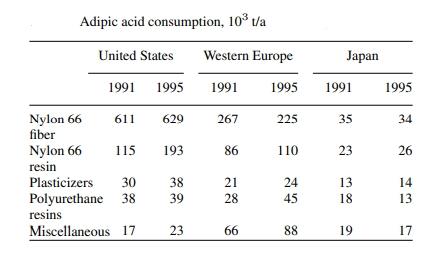
Adipic acid, a white crystalline solid, has a chemical formula of (CH2)4(COOH)2. It is a key component in the production of nylon 6-6, a widely used plastic. Nylon finds applications in textiles, carpets, engineering components, and more. The structural feature of adipic acid is a six-carbon chain with a carboxylic acid group (COOH) at each end. These functional groups allow adipic acid to react with other molecules, making it a valuable component. Having two carboxylic acid groups makes adipic acid a dicarboxylic acid. This enables it to form strong chemical bonds with diamines (molecules with two amino groups) during polymerization, resulting in stable long-chain polymers like nylon. Carboxylic acid groups also allow adipic acid to participate in various other chemical reactions, opening doors for its use in synthesizing other chemicals.

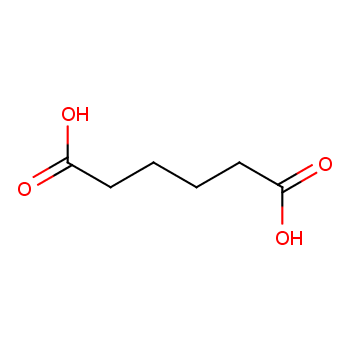
Also known as hexanedioic acid, adipic acid is a linear molecule with a molecular formula of C6H10O4, represented as HOOC(CH2)4COOH.
(1) Carbon Chain: It consists of a six-carbon (C6) chain, with each carbon atom denoted as "C."
(2) Carboxylic Acid Groups: There are two carboxylic acid groups (COOH) at the ends of the carbon chain. These groups are related to the acidity of adipic acid. Each carboxylic acid group consists of a carbonyl group (C=O) bonded to an oxygen atom (O), which is then single-bonded to a hydroxyl group (OH).
Adipic acid is sparingly soluble in water but soluble in ethanol. It is not highly soluble in water. Its solubility in water varies with temperature:
At 10°C: 14 g/L
At 25°C: 24 g/L
At 100°C: 1600 g/L
With increasing temperature, the solubility of adipic acid in water also increases. However, even at high temperatures, it is not considered highly soluble.
Adipic acid (C6H10O4) itself is a covalent molecule: (1) Low melting point: The low melting point of adipic acid indicates it is a covalent compound; (2) Solubility in water: Adipic acid's insolubility in water is consistent with covalent compounds; (3) Conductivity in solution: Covalent compounds like adipic acid typically exhibit low conductivity when dissolved in water.
Adipic acid is a dicarboxylic acid, a derivative of butane-1,4-dioic acid. It serves as a food acidity regulator and an exogenous metabolite in the human body. It is a dicarboxylic acid and a dicarboxylic fatty acid, the conjugate acid of adipate(1-). Adipic acid is a carboxylic acid, which can donate a hydrogen ion (H+) in the presence of a base. This donation produces a negatively charged ion called the adipate ion. The adipate ion can then form ionic bonds with metals or other cations. Adipic acid compounds exist in forms of adipate anion (HO2C(CH2)4CO2-) and dianion (?O2C(CH2)4CO2?). Adipic acid compounds are the carboxylate salts or esters of acids.
Whether a molecule is polar or nonpolar depends on the degree of equal sharing of electrons between its constituent atoms. This is influenced by the concept of electronegativity.
Electronegativity is the attraction of an atom in a chemical bond for electrons. Atoms with higher electronegativity tend to "pull" electrons closer to themselves in a bond.
In polar molecules, there is unequal sharing of electrons between the bonded atoms, resulting in slight positive and negative regions within the molecule. The atom with higher electronegativity exerts a stronger pull on the shared electrons, causing that atom to carry a partial negative charge, while the other atom carries a partial positive charge. Water (H2O) is a typical example. Oxygen is more electronegative than hydrogen, so electrons are pulled closer to the oxygen atom, creating a partial negative charge at the oxygen end and a partial positive charge at the hydrogen end.
In nonpolar molecules, electrons are shared equally between atoms. This occurs in two cases:
Same Element: When a molecule contains only one type of atom (e.g., oxygen gas, O2), electronegativity values are obviously the same, and electrons are equally shared.
Symmetrical Sharing: Even in molecules with different elements, if the electronegativity difference is small and the molecule is symmetrical, electrons can be shared equally, resulting in no net positive or negative regions. Carbon dioxide is an example. Due to the linear structure of the molecule, oxygen atoms exert similar forces on the shared electrons, canceling out any polarity.
Adipic acid, with two carboxylic acid groups (-COOH), possesses specific chemical properties due to this structure. The polarity of adipic acid affects its solubility, melting point, reactivity, and more. Its symmetrical structure results in even distribution of carboxylic acid groups at both ends, with four methylene (-CH2-) groups in between. Carboxylic acid groups in adipic acid (COOH) can lose a hydrogen ion (H+) in solution, forming carboxylate ions (COO-), which carry a negative charge. These negative charges can attract the positive charges of neighboring hydrogen atoms on other molecules, forming hydrogen bonds.
The carbon-carbon bonds and carbon-hydrogen bonds in adipic acid are nonpolar because the electronegativity difference between these atoms is very small. However, the carbon-oxygen bonds and oxygen-hydrogen bonds in the carboxyl groups are polar due to significant electronegativity differences. Oxygen atoms, being more electronegative than carbon and hydrogen, pull electrons closer to themselves, creating partial negative charges on oxygen and partial positive charges on carbon and hydrogen. This means each carboxyl group has a net dipole moment, which measures the overall polarity of a group of atoms.
The dipole moments of the two carboxyl groups in adipic acid are not completely opposite because they are not aligned along the same axis. This implies they do not fully cancel out, and adipic acid as a whole molecule possesses a small net dipole moment. Thus, it can be concluded that adipic acid is polar but not strongly so.
These polar interactions impart a certain degree of polarity to adipic acid, making it more soluble in polar solvents like water compared to nonpolar solvents such as benzene.
In conclusion, adipic acid, as a dicarboxylic acid with two carboxylic acid groups, exhibits some degree of polarity. Although the overall molecule has a small net dipole moment, the polarity characteristics of the carboxyl groups' carbon-oxygen and oxygen-hydrogen bonds contribute to adipic acid's polarity. Regarding the polarity of adipic acid, attention and control are necessary in practical applications to ensure its safe handling and use. By delving into the chemical properties of adipic acid, we can better utilize its characteristics while also giving due consideration to its potential impacts and risks.
[1]https://en.wikipedia.org/wiki/Adipic_acid
[2]https://pubchem.ncbi.nlm.nih.gov/compound/Adipic-Acid
[3]https://brainly.com/question/34261554
[4]https://scholarworks.uark.edu/cgi/viewcontent.cgi?referer=&httpsredir=1&article=1107&context=cheguht
 |
 |
 |
 |
 |
 |
 EN
EN
 Agricultural News
 Food News
 Industrial News
 Cosmetic News
 Pharmaceutical News
 Science News

 1YR
1YR

