-
We detected your language preference as English. Would you like to switch to the English version for a better experience?
Switch to English
Stay here


The oxidation number finds wide applications in various fields, such as assessing the stability of oils and their antioxidant properties in the food industry and evaluating the oxidative capacity of atmospheric pollutants in environmental science. Sodium metabisulfite, a white crystalline powder with the chemical formula Na2S2O5, holds significant importance as a chemical compound. It finds extensive usage across multiple industries including chemical, fragrance, paper, textile, leather, cosmetics, skincare, water treatment, food, and pharmaceutical industries. As mentioned above, the oxidation number is a crucial concept in chemistry with rich significance and wide-ranging applications. In the utilization of sodium metabisulfite, the concept of oxidation number is fully manifested, allowing us to delve deeper into the properties and uses of this important chemical compound.
Understanding the oxidation number is paramount in chemistry as it indicates the charge an atom would carry if all the chemical bonds were ionic. This concept is crucial for determining electron transfer in chemical reactions and understanding the chemical properties of compounds. The oxidation number aids in determining the oxidation or reduction state of atoms in compounds, facilitating the balancing of chemical equations and predicting reaction outcomes.
Sulfur plays a crucial role in determining the oxidation number of compounds like sodium metabisulfite. It exhibits different oxidation states depending on its chemical environment. The oxidation states of sulfur reflect its ability to form multiple bonds with different elements and underscore the importance of considering the chemical background in determining the oxidation numbers of complex compounds. Understanding the role of sulfur in oxidation number determination contributes to the comprehension of chemical bonds and reaction mechanisms, aiding in accurate analysis and prediction of chemical behavior.
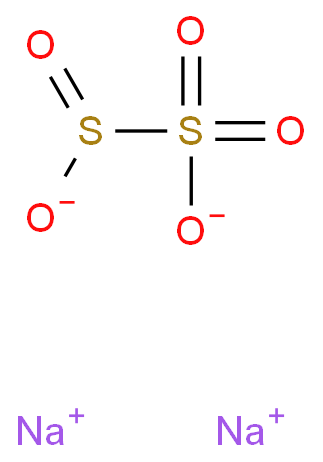
Sodium metabisulfite, with the chemical formula Na2S2O5, is also known as sodium pyrosulfite or disodium metabisulfite. It consists of sodium cations (Na) and metabisulfite anions (S2O52-). Comprising two sodium ions and one metabisulfite ion, the structure of Na2S2O5 is illustrated in the diagram below:
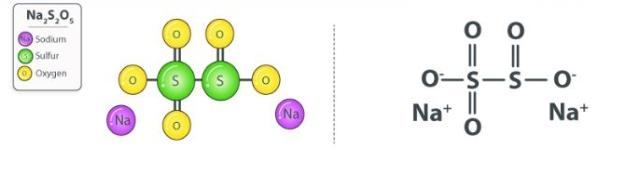
A distinctive feature of the metabisulfite (or pyrosulfite) anion is the direct linkage between two sulfur atoms. One sulfur atom is bonded to three oxygen atoms, exhibiting an oxidation state of +5, while the other sulfur atom displays an oxidation state of +3, bonded to two oxygen atoms.
Determining the oxidation state of sulfur in sodium metabisulfite (Na2S2O5) involves a systematic process, considering specific rules and considerations. Firstly, it's crucial to understand that the oxidation state of an element in its elemental form is always zero. In Na2S2O5, sodium (Na) typically exhibits an oxidation state of +1, while oxygen (O) usually has an oxidation state of -2. Secondly, sulfur (S) can adopt various oxidation states, but in this compound, the first sulfur atom is bonded to three oxygen atoms, each with an oxidation state of -2. By using the formula where the sum of the oxidation states of all atoms in a compound equals zero, we can determine that the oxidation state of the first sulfur atom is +5. Similarly, the second sulfur atom is bonded to two oxygen atoms with oxidation states of -2 each. Following the same logic, the oxidation state of the second sulfur atom is +3.
(1) Influence of Sulfur Oxidation Number on Chemical Properties of Sodium Metabisulfite
The oxidation number of sulfur in sodium metabisulfite (Na2S2O5) holds significance in its chemical properties and its role in various reactions. With sulfur exhibiting a +5 oxidation state in sodium metabisulfite, this compound displays unique chemical behavior. The oxidation number of sulfur affects the reactivity of the compound and its ability to participate in redox reactions. In sodium metabisulfite, the high oxidation state of sulfur enhances its efficacy as a reducing agent, enabling it to undergo reactions by donating electrons to other substances, thus facilitating chemical transformations. This oxidation state also influences the compound's ability to act as a preservative in various applications such as the food and beverage industry, where sodium metabisulfite is used to inhibit microbial growth and prevent oxidation.
(2) Application of Oxidation Number Knowledge in Practical Scenarios
The oxidation number of sulfur in sodium metabisulfite is a key factor in determining its suitability in specific applications and its effectiveness in various chemical processes. Understanding the relationship between oxidation number and reactions involving sodium metabisulfite allows for precise control of its usage in practical situations. For instance, knowledge of the oxidation state of sulfur guides the dosage and application of sodium metabisulfite in winemaking, where it is employed to inhibit microbial activity and maintain wine quality. Similarly, in food preservation, the oxidation number of sulfur dictates the formulation of solutions based on sodium metabisulfite to ensure the desired level of microbial control while minimizing adverse effects on product quality. Thus, the oxidation number of sulfur in sodium metabisulfite is a critical parameter for optimizing its performance in various industrial and commercial applications.
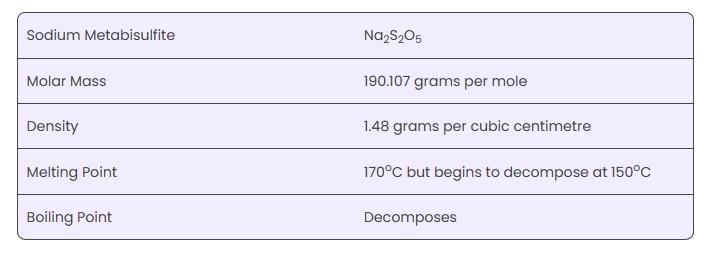
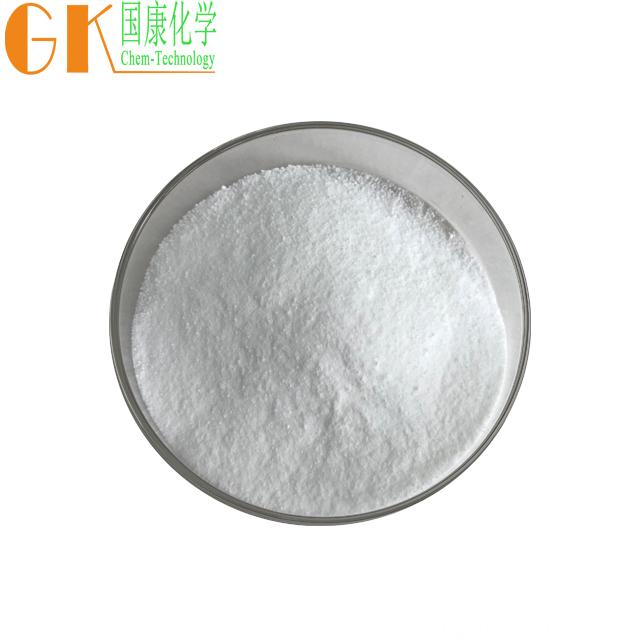
(1) Sodium metabisulfite appears white or off-white in solid form.
(2) It possesses a slight pungent odor reminiscent of sulfur dioxide.
(3) Na2S2O5 is soluble in water, with a solubility of 65.3g/100mL at 20°C.
(3) This compound is highly soluble in glycerol but less soluble in ethanol.
Sodium metabisulfite finds diverse applications as an antioxidant, preservative, and disinfectant. Below are some significant applications of this compound:
(1) Na2S2O5 is a primary component in Campden tablets. It is also used for disinfecting equipment used in winemaking.
(2) This compound is utilized to extend the shelf life of several local anesthetics.
(3) Concentrated Na2S2O5 can degrade lignin in tree stumps, used for stump removal.
(4) Sodium metabisulfite is also employed in the detection of sickle cell disease.
(5) It aids in precipitating gold when dissolved in aqua regia.
(6) Due to its oxygen-clearing properties, Na2S2O5 is used as a corrosion inhibitor in the petroleum industry.
(7) This compound is also utilized in wastewater treatment, as it can reduce hexavalent chromium to its trivalent form.
(1) Brief Overview of Redox Reactions and their Relevance
Redox (oxidation-reduction) reactions play a crucial role in chemistry, involving the transfer of electrons between reactants. The oxidation number is a central concept in understanding redox reactions, serving as a valuable tool for tracking electron transfers in chemical substances. It indicates the hypothetical charge an atom would carry if all the chemical bonds were purely ionic. Oxidation numbers apply to various elements and compounds, reflecting their tendencies for electron sharing and oxidation or reduction.
(2) Linking Oxidation Numbers to the Behavior of Chemical Substances
Oxidation numbers directly influence the behavior of chemical substances, guiding their involvement in oxidation and reduction processes. Elements and compounds with higher oxidation numbers tend to act as oxidizing agents, readily accepting electrons from other substances. Conversely, those with lower oxidation numbers typically act as reducing agents, providing electrons to oxidizing agents to facilitate reduction. Understanding the relationship between oxidation numbers and chemical behavior enables chemists to predict reaction outcomes, design synthesis routes, and manipulate reaction conditions to obtain desired products. Additionally, oxidation numbers aid in elucidating the mechanisms of redox reactions, revealing pathways of electron transfer and chemical transformations during the reaction process.
Grasping the significance of the oxidation number of sodium metabisulfite unveils its role in chemistry, particularly in understanding redox reactions and industrial applications at a deeper level. In this article, we delved into the concept of oxidation numbers and their applications in understanding the behavior of chemical substances, using sodium metabisulfite as a case study. By elucidating the oxidation states of sodium, sulfur, and oxygen in sodium metabisulfite, we gained insight into its reactivity and efficacy as an antioxidant. Furthermore, we explored the correlation between oxidation numbers and chemical behavior, emphasizing how this knowledge informs the dosage and application of sodium metabisulfite in various practical scenarios such as food preservation and winemaking. Lastly, I encourage further exploration of chemical concepts to deepen understanding and foster innovation in the field.
[1] https://byjus.com/chemistry/sodium-metabisulfite/
[2] https://pubchem.ncbi.nlm.nih.gov/compound/656671
[3] https://en.wikipedia.org/wiki/Sodium_metabisulfite
 |
|
 |
 |
 |
 |
 EN
EN
 Agricultural News
 Food News
 Industrial News
 Cosmetic News
 Pharmaceutical News
 Science News

 1YR
1YR


