
I. Executive Summary
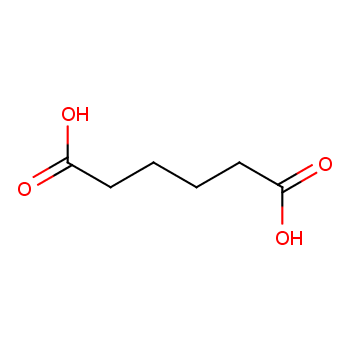
Adipic acid, or hexanedioic acid (CAS 124-04-9), is the highest-volume industrial dicarboxylic acid, with formula C6H10O4, molecular mass 146.14 and a melting point near 152 degrees Celsius, supplied as a free-flowing white crystalline solid. Virtually all commercial production starts from cyclohexane or cyclohexanol and cyclohexanone mixtures oxidised with nitric acid, and most output is condensed with hexamethylenediamine to give the nylon 6,6 salt. The remainder feeds polyester polyols for polyurethanes, adipate ester plasticisers and lubricant base stocks, unsaturated polyester resins and food-grade acidulant applications.
Two structural facts dominate the business. Demand is entirely derived from durable-goods chains, including automotive, electrical and electronics, textiles, footwear, packaging and construction, so volumes track industrial production and light-vehicle build rates rather than consumer sentiment alone. And because the nitric acid oxidation route generates nitrous oxide, with a hundred-year global warming potential roughly two hundred and seventy times that of carbon dioxide, abatement and verified emissions accounting have become licence-to-operate issues.
Compliance therefore spans chemical registration and classification, food-additive purity and food-contact rules, transport and dust safety, and climate regulation. European producers work under REACH registration, CLP classification for serious eye irritation, food-additive purity criteria for acidulant E355 and Emissions Trading System monitoring, while United States operators manage TSCA reporting, Title 21 food provisions and Environmental Protection Agency greenhouse gas and air permitting.
II. Product Deep Dive: Molecular Mechanisms and Production Evolution
2.1 Physicochemical Properties and Mechanisms
Adipic acid is a linear six-carbon diacid whose carboxyl groups have dissociation constants near 4.4 and 5.4, giving ready salt formation with bases, esterification under acid catalysis and useful buffering capacity. Its value in polymer chemistry comes from bifunctionality and from the flexible methylene spacer, which imparts low-temperature flexibility and hydrolytic resilience to derived polyesters and polyamides.
- Polyamide salt formation and polycondensation: Neutralisation with hexamethylenediamine gives the stoichiometric nylon salt, condensed at high temperature with water removal to build amide linkages and molecular weight. Precise stoichiometric balance and control of monofunctional impurities are decisive, since any imbalance caps chain length and degrades resin or yarn properties.
- Esterification, plasticisation and buffering: Reaction with diols such as ethylene glycol, butanediol or neopentyl glycol yields polyester polyols tuned for polyurethane elastomers, adhesives and coatings, while esterification with branched alcohols gives adipate plasticisers and lubricant base stocks prized for low-temperature performance. In food systems the diacid acts as acidulant, buffer and gelling aid.
2.2 Synthesis and Manufacturing Technologies
The incumbent route oxidises cyclohexanol and cyclohexanone, known as KA oil, with nitric acid over copper and vanadium catalysts, producing adipic acid alongside glutaric and succinic acid, with product recovered by multi-stage crystallisation and nitric acid recycled. Newer peroxide, air-oxidation and bio-based routes aim to break the link between adipic acid and nitrous oxide, but cost parity remains the barrier.
- Oxidation control and purification: Staged continuous reactors hold temperature and acid strength within tight windows because the oxidation is highly exothermic and selectivity falls sharply outside them, and the catalyst ratio is managed to suppress lighter diacids. Crystallisation and drying then deliver polymerisation-grade material above 99.7 percent purity with tight limits on glutaric and succinic acid, nitrate residues, iron and colour.
- Nitrous oxide abatement and alternative routes: Modern plants install thermal or catalytic destructors that decompose nitrous oxide to nitrogen and oxygen, typically achieving high conversion, and some recover the gas as a feedstock for phenol production or reconvert it to nitric acid. Parallel development efforts target bio-based and electrochemical routes, but these must match the incumbent on both cash cost and polymerisation-grade purity, so adoption depends as much on customer willingness to pay for lower embodied carbon as on process economics.
2.3 Core Application Matrix
- Nylon 6,6 resins and fibres: The largest outlet serves engineering plastics for automotive under-hood and thermal management parts, electrical connectors and cable management, and industrial yarn for tyre cord, airbags, technical textiles and carpets. This segment demands polymerisation-grade purity with strict control of metals, nitrogenous impurities and colour precursors.
- Polyurethanes, plasticisers and lubricants: Polyester polyols made with adipic acid supply elastomers, footwear soles, adhesives and coatings where hydrolysis resistance and low-temperature flexibility matter, while adipate esters plasticise polyvinyl chloride for film and cable applications and serve as synthetic lubricant base stocks valued for low-temperature fluidity.
- Food, pharmaceutical and speciality uses: Food-grade material is used as acidulant and buffer E355 in dessert powders, beverage bases and baking systems, and pharmaceutical excipient grades serve as acidifiers and controlled-release modifiers. Smaller volumes go into unsaturated polyester resins, alkyd coatings, adhesives and electronics chemicals, where consistency and colour matter more than bulk price.
III. Global Market Supply-Demand Landscape and Export Trends
3.1 Demand Drivers and Market Shifts
Demand growth is anchored in automotive lightweighting and electrification, which raise engineering plastic content per vehicle, and in construction, footwear and packaging activity across emerging Asia. Countervailing pressures include substitution towards alternative polyamides and polyesters and the emergence of chemical recycling that depolymerises nylon 6,6 to monomers, while disruptions in the hexamethylenediamine chain remain a source of volatility.
3.2 Capacity Distribution and Export Flows
Capacity is concentrated in Asia-Pacific, where China holds the largest and newest asset base and has moved from importer to net exporter, followed by integrated North American producers tied to nylon 6,6 chains and by mature European assets facing high energy and carbon costs. Trade flows follow cost parity, with Asian material moving into Turkey, India, Europe and Latin America, while trade-remedy measures and rules-of-origin requirements in several jurisdictions reshape routing and pricing. Producers without regional integration increasingly compete only on spot export economics.
3.3 Market Bifurcation and Pricing Dynamics
Pricing tracks benzene and cyclohexane, nitric acid and ammonia, and energy, and is normally settled through formula contracts with feedstock pass-through and monthly or quarterly resets. The market bifurcates between high-volume polymerisation grade, where Asian export parity increasingly sets the ceiling, and food, pharmaceutical and speciality ester grades, where certified quality systems and documentation support durable premiums. Glutaric and succinic acid co-product credits and freight costs materially affect net realisations.
IV. In-depth Analysis of Global Compliance and Regulatory Barriers
Although adipic acid is a mature bulk chemical, it is regulated on more fronts than most commodities: chemical registration and classification at high tonnage, food-additive purity and food-contact rules where it enters the food chain, occupational dust safety, and climate regulation aimed squarely at nitrous oxide. Exporters must maintain separate, well-documented grade streams, because a food or pharmaceutical consignment contaminated with technical-grade material is a recall event rather than a quality deviation.
4.1 European Market: REACH, CLP, and Sector-Specific Directives
- REACH, CLP and emissions permitting: High-tonnage registration requires a complete joint dossier with chemical safety report and exposure scenarios covering industrial, professional and consumer uses, and non-EU producers must appoint an only representative. The substance carries classification for serious eye irritation with corresponding GHS labelling, and production sites operate under Industrial Emissions Directive permits with emission limits and nitrous oxide monitoring integrated into national inventories.
- Food additive and food-contact rules: Food use depends on authorisation under Regulation (EC) No 1333/2008 together with the purity criteria of Regulation (EU) No 231/2012, which set limits for heavy metals and other impurities, while food-contact applications must comply with Regulation (EU) No 10/2011 migration requirements. Food-grade handling additionally demands a certified food-safety management system with hazard analysis and critical control points.
4.2 North American Market: TSCA, EPA, and FDA Regulations
- TSCA reporting and FDA food provisions: The substance is an active TSCA inventory entry produced well above the thresholds that trigger periodic Chemical Data Reporting, and importers should confirm inventory status before first shipment. Food and food-contact uses rely on the applicable multipurpose food substance provisions of Title 21 of the Code of Federal Regulations, Food Chemicals Codex specifications, and clearances for the polymers and coatings into which the diacid is incorporated.
- EPA greenhouse gas and air obligations: Nitrous oxide from adipic acid manufacture is reportable under Environmental Protection Agency greenhouse gas reporting, and nitrous oxide and nitrogen oxide emissions are addressed through Clean Air Act permitting, including title V operating permits and new source review where capacity changes. Occupational safety expectations include dust hazard assessment under Occupational Safety and Health Administration programmes and combustible dust standards.
4.3 The Critical Hurdle: Quality Control and Safety Limits
Compliance Warning: The two decisive hurdles are nitrous oxide accountability and grade segregation. Operators must measure nitrous oxide with verified continuous monitoring, prove abatement performance with auditable destruction efficiency, and report under the applicable emissions trading or greenhouse gas programme, because one unabated oxidation train can dominate an entire site's carbon footprint. Food, pharmaceutical and polymerisation grades must never be co-mingled with technical grade, and food-grade production and loading must take place under a certified food-safety system with heavy metal, nitrate and colour control. Handling must address combustible dust through hazard assessment, earthing, housekeeping and deflagration protection, and the acid must be kept away from strong oxidisers and concentrated alkali, where neutralisation is strongly exothermic.
V. Green Trade Barriers and ESG in Manufacturing
Nitrous oxide is the defining environmental issue for this product and increasingly the deciding factor in customer procurement. Automotive, electrical and footwear customers request verified product carbon footprints per tonne for Scope 3 accounting, while investors screen producers on abatement performance, and ISO 9001, ISO 14001 and recognised disclosure are baseline expectations in multinational polymer chains.
5.1 Carbon Footprint and Circular Economy
Scope 1 emissions are dominated by nitrous oxide from oxidation, Scope 2 covers electricity for crystallisation, drying and compression, and Scope 3 covers benzene or cyclohexane, nitric acid and ammonia, freight and downstream conversion. Abatement, heat recovery, high-efficiency nitric acid plants and renewable power are the primary levers. Although the product is not itself within current carbon border adjustment mechanism scope, covered downstream exporters increasingly demand verified emissions data.
5.2 Sustainable Sourcing and Traceability
Traceability starts with the aromatic and ammonia feedstock chain, where refinery and fertiliser sourcing practices drive upstream emissions, and extends to certified bio-based routes using mass-balance schemes such as ISCC PLUS or RSB with radiocarbon-verified content. Circular content from chemical recycling of nylon 6,6 requires its own chain-of-custody documentation. Producers should pair these with ISO 9001 and ISO 14001 certification, water stewardship and wastewater nitrate control, supplier codes of conduct and batch-level traceability from reactor through to delivered lot.
VI. Supply Chain Resilience and Export Logistics
Adipic acid is a free-flowing crystalline solid that cakes when it absorbs moisture or experiences temperature cycling, so the logistics system is designed around dryness and dust control rather than around containment of vapours. Bulk movements use hopper rail cars, bulk road tankers and container liners, while packaged volumes move in twenty-five kilogram bags and one-tonne flexible intermediate bulk containers, with food-grade consignments requiring food-contact-compliant liners and certified loading.
6.1 Packaging Standards and Moisture/Contamination Control
- Caking, moisture and dust control: Use moisture-barrier liners inside woven bags or flexible intermediate bulk containers, keep storage dry, cool and ventilated, and avoid temperature cycling that causes bridging and caking in silos. Dust generated during loading must be controlled by extraction and filtration, with earthing and deflagration protection appropriate to a combustible organic dust, and lots should be re-sampled and re-tested after prolonged storage.
- Food-grade compliance and documentation: Food and pharmaceutical consignments require food-contact-compliant packaging under Regulation (EC) No 1935/2004 and Regulation (EU) No 10/2011 or equivalent United States clearances, and loading under a certified food-safety system. Bulk containers and silos must be cleaned to a validated standard before food-grade service, and each lot ships with certificate of analysis, origin documentation for customs and trade-remedy purposes, and full batch identification.
6.2 Dangerous Goods Identification and Transit Protocols
Adipic acid is not classified as a dangerous good for transport under ADR, IMDG or IATA, so no United Nations number applies and standard bulk or packaged freight is permitted, subject to confirmation against the current safety data sheet. The real transport risks are moisture ingress and dust explosion, so bulk vehicles and container liners must be clean, dry and closed, transfer points equipped with dust collection and earthing, and segregation from strong oxidisers and caustic materials maintained. Shipments are declared under customs heading 2917, and exporters should maintain origin and valuation records sufficient to satisfy trade-remedy and rules-of-origin checks.
VII. Enterprise Global Expansion Strategy Guide
Producers that prosper in this market will be those that decouple themselves from commodity cycling through abatement leadership, grade differentiation and circular partnerships. The following priorities reflect how polymer, food and footwear customers choose suppliers over multi-year contracts.
- Treat nitrous oxide performance as market access: Install high-efficiency abatement, verify destruction by continuous monitoring, and publish audited product carbon footprint data. Emissions performance is rapidly becoming a qualification criterion rather than a compliance afterthought.
- Move into certified food, pharmaceutical and ester grades: Invest in segregated production and loading, certified food-safety systems and documented purity, and develop ester derivatives for plasticisers and lubricants. These grades carry defensible premiums and are less exposed to export parity pricing.
- Partner on circular and bio-based programmes: Secure offtake agreements with nylon and polyurethane customers seeking lower Scope 3 emissions, and back them with certified mass-balance or recycled-content chain of custody. Early partnership locks in volumes before capacity becomes commoditised.
VIII. Conclusion
Adipic acid remains the backbone of the nylon 6,6 chain and a key building block for polyester polyols, plasticisers and food acidulants, but its economics are being rewritten by Asian overcapacity, which caps polymerisation-grade pricing, and by climate policy that prices nitrous oxide. Producers responding with verified abatement, differentiated grades and circular partnerships will protect margins commodity-only assets cannot sustain.
For buyers, the agenda is to qualify suppliers on emissions performance and grade segregation as well as on price, to require audited product carbon footprint data and validated food-grade controls, and to secure dual sourcing across regions to manage trade-remedy and feedstock risk. Organizations that combine these criteria with long-term contracts tied to verified sustainability performance will be best positioned as carbon constraints tighten through the remainder of the decade.
IX. Industry Resource Connection and Supplier Ecosystem
Powered by Guidechem
This white paper is exclusively compiled by the Guidechem Intelligence Team based on global customs data, regulatory databases, and industry research. Guidechem is a leading global B2B chemical platform, dedicated to connecting global buyers with verified, high-quality manufacturers.
Relying on Guidechem's extensive global database, we have mapped the core participants in the current global Adipic acid supply chain:
- North America: Integrated producers anchored to nylon 6,6 chains operate cyclohexane oxidation, nitric acid recovery and nitrous oxide abatement, serving engineering plastics, food and speciality ester customers. Differentiation rests on supply reliability, technical service, certified food-grade capability and documented emissions performance rather than on spot price.
- Europe: Mature European assets combine high-tonnage REACH dossiers with European Union Emissions Trading System participation, advanced abatement and strong environmental management under high energy and carbon costs. Suppliers compete on food and pharmaceutical grades, low-carbon credentials and participation in bio-based and chemically recycled nylon programmes.
- Asia-Pacific and China: The region holds the largest and newest capacity base, integrated to aromatics and nitric acid, and increasingly sets global export parity. Competitive advantage rests on scale, energy integration and cost, while leading producers invest in nitrous oxide abatement, food-grade certification and export compliance to retain access to regulated and trade-remedied markets.
Disclaimer: The content of this white paper is compiled based on public market data and regulatory information available as of 2026. Global chemical regulations are subject to dynamic adjustments. In actual export operations, enterprises must consult professional regulatory advisors or relevant competent authorities to obtain the latest compliance guidance.




 EN
EN
 Agricultural News
 Food News
 Industrial News
 Cosmetic News
 Pharmaceutical News
 Science News

 1YR
1YR

