
I. Executive Summary
Zinc oxide (ZnO, CAS 1314-13-2) is at once a bulk industrial inorganic and a tightly specified mineral for pharmaceutical, cosmetic and electronic use. Buyers therefore face a family of engineered solids rather than one commodity. Value is set by BET surface area, particle size, surface treatment, residual lead and cadmium content, and documentation depth. Two lots of identical assay can differ several-fold in delivered price.
Three forces are reshaping sourcing strategy. European withdrawal of authorisations for high-dose in-feed use removed major tonnage while raising purity expectations elsewhere. The harmonised aquatic classification, H400 and H410, has made labelling, wastewater permitting and marine documentation genuine procurement variables. Finally, nanoform obligations under REACH and the nano provisions of Cosmetics Regulation (EC) 1223/2009 separate microstructured powder from nanoscale material.
This paper sets out what purchasing, quality and regulatory-affairs teams need. It reviews the crystallography and surface chemistry governing performance, contrasts production routes and their purity consequences, and maps applications from tyres to conductive oxides. It then examines how capacity is shifting between China, Europe, India and North America.
II. Product Deep Dive: Molecular Mechanisms and Production Evolution
2.1 Physicochemical Properties and Mechanisms
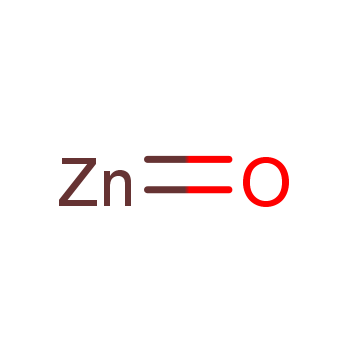
Zinc oxide adopts the hexagonal wurtzite structure, each zinc atom tetrahedrally coordinated to four oxygen atoms. That arrangement gives a direct band gap near 3.3 eV, a refractive index around 2.0 and a density close to 5.6 g/cm3. The oxide is amphoteric, dissolving in dilute acids to free Zn2+ and in concentrated alkali to form zincate. Those properties govern UV attenuation, interfacial reactivity, dissolution behaviour and environmental fate.
- Band Structure and UV Response: The wide direct band gap lets the oxide absorb strongly below roughly 380 nm, spanning UVB and much of short UVA, while its high refractive index scatters visible light. Reducing primary particles below about 100 nm shifts scattering into the transparent regime that modern sun care requires. Oxygen vacancies and interstitial zinc also generate the reactive species studied in toxicology, and support varistors and aluminium-doped films.
- Amphoteric Surface Reactivity: The hydrated surface carries Zn-OH groups with a point of zero charge near pH 9 to 10, explaining pH-dependent dissolution and the solubility minimum in mildly alkaline water. Rubber compounding exploits that reactivity, since the oxide forms soluble zinc carboxylates with stearic acid and accelerates sulphur vulcanisation. The same dissolved Zn2+ drives both nutritional bioavailability and aquatic toxicity.
2.2 Synthesis and Manufacturing Technologies
Three manufacturing families coexist, and the route largely predetermines the market a producer serves. The indirect route yields the cleanliness required for pharmaceutical, cosmetic and food-contact grades. The direct route converts secondary and low-grade zinc streams into cost-competitive technical material. Wet precipitation with controlled calcination delivers the high-surface-area, morphologically tailored powders used in catalysis and electronics.
- Indirect (French) Process: Special high-grade metal is vapourised at roughly 900 to 1000 °C and oxidised with pre-heated dried air, quenching nuclei into particles of 0.1 to 0.5 µm with BET values typically between 3 and 10 m2/g. Because the only inputs are refined metal and clean air, purity reaches 99.5 to 99.9%, with lead and cadmium far below topical limits. Dedicated campaigns then hold assay between 99.0 and 100.5% for monograph grades.
- Direct Process and Precipitation Routes: The direct route calcines secondary feedstocks such as electric-arc-furnace dust and zinc ash in Waelz or rotary kilns with a carbon reductant, then re-oxidises the metal vapour. It is economical, but carries chloride, alkali, lead and cadmium burdens managed through washing and baghouse capture. Wet routes precipitate basic zinc carbonate from purified zinc sulphate and calcine between 500 and 800 °C to tune surface area.
2.3 Core Application Matrix
- Rubber Compounding and Tyres: Combined with stearic acid, the oxide forms soluble zinc carboxylates that accelerate sulphur vulcanisation and improve heat ageing. Loadings of two to five parts per hundred rubber are typical, and tyres absorb close to half of world output. Demand tracks vehicle parc, yet faces pressure from the zinc-reduction programmes that manufacturers adopt to satisfy discharge permitting.
- Sun Care and Dermatologicals: Annex VI of Cosmetics Regulation (EC) 1223/2009 permits the oxide as a UV filter up to 25%, allowing nano forms except where the lungs may be exposed, while the United States allows the same maximum under the OTC monograph at 21 CFR 352. It also serves barrier ointments and calamine preparations. Specifications combine USP or Ph.Eur. limits with microbial testing to USP <61> and <62>.
- Nutrition, Ceramics and Electronics: Nutritional demand persists in premixes after withdrawal of high-dose European feed use, and keeps expanding where livestock production intensifies. Technical outlets include glazes, soft manganese-zinc ferrites, surge varistors and refinery guard beds absorbing hydrogen sulphide as zinc sulphide. Display and photovoltaic applications demand semiconductor-purity material with controlled sintering behaviour.
III. Global Market Supply-Demand Landscape and Export Trends
3.1 Demand Drivers and Market Shifts
Demand behaves as three independent markets sharing one chemistry. Industrial demand from tyres, rubber goods and ceramics is largest by tonnage and is slowly eroded by formulators seeking to cut zinc discharge. Nutritional demand contracted sharply in Europe yet keeps growing across Asia-Pacific and Latin America. Specialty demand is least price-elastic, because requalification is expensive and the oxide is a small share of finished-product cost.
3.2 Capacity Distribution and Export Flows
China anchors global capacity, holding the largest share of refining and conversion near its smelting clusters. Europe retains integrated production tied to its own metal and leads in high-purity and cosmetic grades, although electricity costs squeeze energy-intensive steps. India is adding capacity for tyres and paints, while North America stays import-dependent. Flows run mainly westward, punctuated by curtailment and trade measures on metal-bearing products.
3.3 Market Bifurcation and Pricing Dynamics
The market is unusually bifurcated. Technical material is priced as contained metal plus conversion plus freight, tracking London Metal Exchange zinc with thin margins. Premium grades earn durable surcharges through documentation: ICP-MS trace-metal data, BET and laser-diffraction results, surface-treatment identity, microbial testing, and ISO 9001 or EXCiPACT alignment. Qualification takes months, so regulated buyers are effectively locked in.
IV. In-depth Analysis of Global Compliance and Regulatory Barriers
Hazard assessment scales with particle size and handling route, so the burden varies sharply between grades. Microstructured material is among the best characterised inorganic registrations, yet the nanoscale regime adds obligations that exporters routinely underestimate. Sector rules also reach the substance, from cosmetics and feed legislation to toy-migration limits.
4.1 European Market: REACH, CLP, and Sector-Specific Directives
- REACH Registration and Nanoform Coverage: The substance is registered in the highest tonnage band, with long-term aquatic toxicity data and a chemical safety report covering worker, consumer and environmental scenarios. Since the nanoform amendments took effect, registrations must cover nanoforms through defined sets characterised by number-based size distribution, surface area, shape, surface chemistry and dustiness. Downstream users must confirm coverage of their own use.
- Cosmetics, Biocides and Adjacent Sector Rules: Annex VI permits the filter up to 25%, excludes applications that may lead to lung exposure, and requires the [nano] designation plus portal notification. Where antibacterial performance is claimed, the Biocidal Products Regulation governs the treated article and inclusion of the active substance. Children's products face element migration limits, and food-contact uses must be checked against Regulation (EU) 10/2011.
4.2 North American Market: TSCA, EPA, and FDA Regulations
- TSCA Status and Nanoscale Reporting: The substance is listed on the TSCA inventory as active, and manufacturers above threshold report under the four-yearly Chemical Data Reporting cycle. The Environmental Protection Agency's reporting rule for certain nanoscale substances also requires notification where material is produced with principal dimensions typically between 1 and 100 nm. Buyers should confirm compliance in writing, since unmet obligations delay onboarding.
- FDA Sunscreen, Cosmetic and Excipient Pathways: The Food and Drug Administration's 2019 proposal identified zinc oxide and titanium dioxide as the two Category I generally recognised as safe and effective filters up to 25%, leaving remaining actives subject to further data. The Modernization of Cosmetics Regulation Act has added facility registration, product listing, adverse event reporting and safety substantiation. Pharmaceutical uses require USP conformance and alignment to 21 CFR 210 and 211.
4.3 The Critical Hurdle: Quality Control and Safety Limits
Compliance Warning: Most rejected shipments fail on one of two attributes: trace metals or unmanaged particle size. Lots intended for cosmetics, food contact or oral use are routinely tested against internal limits such as lead below 10 ppm and cadmium below 5 ppm by ICP-MS following USP <233>, and a mismatch between the certificate of analysis and an independent re-test is the most common cause of dispute. The second failure mode is unintended nanoscale content, since a substantial number-based fraction of particles below 100 nm can invalidate a European customer's non-nano declaration. Finally, the harmonised classification imposes H400 and H410 labelling, and any high-temperature processing generates fresh oxide fume that causes metal fume fever and requires adherence to limits such as the ACGIH threshold limit value of 2 mg/m3 for respirable zinc oxide.
V. Green Trade Barriers and ESG in Manufacturing
This material sits between two carbon-intensive activities, primary smelting and high-temperature conversion, so tenders increasingly ask about embodied carbon. Zinc is not covered by the Carbon Border Adjustment Mechanism, but manufacturers in covered sectors cascade greenhouse gas reporting down their own chains. Personal-care and pharmaceutical buyers now apply Scope 3 targets to inorganic raw materials. Verified footprints therefore win specifications even at higher ex-works prices.
5.1 Carbon Footprint and Circular Economy
The footprint begins upstream, with the grid intensity of metal production and the share of coal-based reductant used. The indirect process is electricity-intensive, so Scope 2 dominates for primary-metal producers, whereas kiln routes carry a heavier Scope 1 burden. Levers include lower-carbon or adequately pure secondary metal, heat recovery with selective electrification, and fewer calcination campaigns. Circular recovery of steel dust helps, provided halides and heavy metals are managed.
5.2 Sustainable Sourcing and Traceability
Traceability now spans metal origin, recycled content and waste-stream legality rather than batch numbers alone. Buyers request mass-balance-verified recycled content, due diligence aligned to OECD guidance for conflict-affected and high-risk areas, and documented controls where secondary materials cross borders under the Basel Convention framework. ISO 14001 and ISO 45001 certification complete the responsible-sourcing file.
VI. Supply Chain Resilience and Export Logistics
Zinc oxide is physically robust yet commercially fragile. It survives transport well, but caking, dust generation and cross-contamination can quietly ruin premium material before arrival. Shipping configuration therefore matters nearly as much as the manufacturing specification.
6.1 Packaging Standards and Moisture/Contamination Control
- Packaging Configurations: Standard units are 25 kg multiwall or woven polypropylene bags with polyethylene liners shrink-wrapped onto pallets, 500 and 1000 kg intermediate bulk containers with form-fit liners and sift-proof seams, and lined drums for electronic grades. Because the powder absorbs moisture and carbonate on standing, promoting caking and rising acidity, a genuine barrier is essential and desiccant bags advisable in humid seasons. Food, feed and pharma lots additionally require virgin liners.
- Dust Control and Loading Discipline: Loading bays should be dedicated or cleaned between campaigns, since iron oxide, carbon black or cement residues are commercially fatal for white grades. Local exhaust ventilation and de-dusting filling heads reduce plumes at the bag mouth.
6.2 Dangerous Goods Identification and Transit Protocols
Pure zinc oxide is not a dangerous good: it has no UN number, is non-combustible and is not water-reactive, unlike metallic zinc dust shipped as UN1436, Class 4.3. Confusing the two causes refused bookings and unnecessary surcharges. Because of the H400 and H410 classification, however, sea transport under the IMDG Code commonly attracts marine-pollutant marking, and some ports add local rules for fine powders.
VII. Enterprise Global Expansion Strategy Guide
Treating this material as an undifferentiated commodity is the most common strategic error, since the same name covers products differing by an order of magnitude in value. A coherent strategy separates volume from specification, builds redundant yet equivalent sources, and invests in documentation. Three moves separate organisations that hold margin from those competing purely on metal-linked price.
- Segment the Portfolio and Contract Accordingly: Split purchasing into a technical stream indexed to metal prices and tendered competitively, and a regulated stream under multi-year agreements fixing every attribute, change-control step and audit right. Require advance notification of any change to raw material origin, furnace configuration or surface treatment. Even a compliant lot made differently can invalidate a finished-product registration.
- Qualify Two Equivalent Sources in Two Regions: Maintain one qualified Asian supplier and one qualified European or North American supplier with demonstrably identical specifications. Validate them through parallel plant trials, round-robin ICP-MS comparisons and full stability runs. Harmonise customs treatment in advance, since the substance falls under Harmonized System heading 2817.00.
- Build Nano Competence and Downstream Stewardship: Suppliers targeting sun care should assemble nanoform characterisation, inhalation-safety data and safe-handling instructions before tendering, then support customers through portal notification and REACH communication. A technical file with number-based particle size distribution, dustiness index and reasoned nanoform determination is often decisive. This capability is slow to replicate and protects share.
VIII. Conclusion
Zinc oxide in 2026 is a study in coexistence: an old, inexpensive inorganic that keeps generating complexity because regulators now classify by particle scale rather than chemical identity. Core rubber and ceramic uses remain secure in volume but face slow substitution. European demand has permanently adjusted to withdrawn high-dose feed use. Specialty segments reward suppliers combining analytical and documentary precision.
For buyers the agenda is clear. Specify engineered solids rather than metal-bearing commodity, insist on pharmacopoeial-style release testing even for technical lots, and build a two-region supply base with documented equivalence. For producers, differentiation lies in lower-carbon metal sourcing, validated circular feedstocks, and instant access to either a nanoform dossier or proof that none is present. Those investments gradually remove price as the deciding variable.
IX. Industry Resource Connection and Supplier Ecosystem
Powered by Guidechem
This white paper is exclusively compiled by the Guidechem Intelligence Team based on global customs data, regulatory databases, and industry research. Guidechem is a leading global B2B chemical platform, dedicated to connecting global buyers with verified, high-quality manufacturers.
Relying on Guidechem's extensive global database, we have mapped the core participants in the current global Zinc oxide supply chain:
- North America Supplier Ecosystem: North America remains import-dependent, retaining conversion capacity tied to its own metal while importing technical and specialty grades. The tier is characterised by strong documentation discipline, alignment to FDA and USP expectations, and distributor networks holding safety stock. Buyers accept a delivered premium for shorter lead times, easier audits and lower change-control risk.
- Europe Supplier Ecosystem: Europe is anchored by smelter-integrated producers converting their own primary and secondary metal, with disproportionate capability in high-purity and cosmetic grades. Operating closest to REACH nanoform obligations and the cosmetics nano provisions, these producers lead on technical-file quality. Their disadvantages are structural: high energy costs, strict permitting and dependence on upstream metal availability.
- Asia-Pacific and China Supplier Ecosystem: Asia-Pacific, led by China, holds the largest share of world capacity, spanning low-cost direct-process technical oxide through to near-pharma indirect-route material. Advantage comes from integrated smelting clusters, secondary zinc access and lower conversion costs. Buyers should budget for independent incoming analysis and for risks from energy policy, environmental campaigns and export administration.
Disclaimer: The content of this white paper is compiled based on public market data and regulatory information available as of 2026. Global chemical regulations are subject to dynamic adjustments. In actual export operations, enterprises must consult professional regulatory advisors or relevant competent authorities to obtain the latest compliance guidance.


 EN
EN
 Agricultural News
 Food News
 Industrial News
 Cosmetic News
 Pharmaceutical News
 Science News

 1YR
1YR

