-
We detected your language preference as English. Would you like to switch to the English version for a better experience?
Switch to English
Stay here


In the field of chemistry, the polarity of molecules is an important research topic. Potassium acetate, as a common compound, has wide applications in laboratories, industrial production, and daily life. However, there has been ongoing discussion about whether potassium acetate is polar. By delving into the molecular structure, chemical properties, and behavior in solutions of potassium acetate, we can better understand its polarity. This article will provide a detailed analysis of the polarity of potassium acetate, discussing its importance and impact in the field of chemistry.
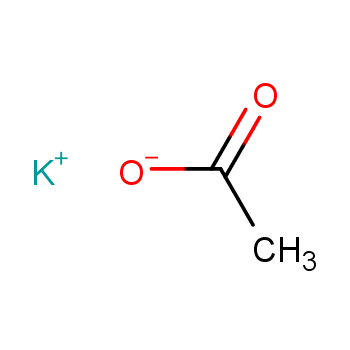
Potassium acetate, also known as potassium ethanoate, has the molecular formula CH3CO2K. It is formed by the reaction of acetic acid with potassium carbonate or potassium hydroxide. Potassium acetate plays a significant role in various physiological functions, maintaining normal kidney function, blood pressure, nerve conduction, cardiac, and skeletal muscle contraction, as well as nucleic acid synthesis. It consists of an acetate anion (CH3COO-) and a potassium cation (K+), bonded by ionic bonds. However, the acetate anion is covalently bonded between carbon and oxygen, with resonance stabilization.
Potassium acetate is a compound formed by the combination of potassium and acetic acid. It exists in solid form at room temperature and readily absorbs moisture from the surrounding air. In the medical field, it is used as a source of potassium to treat deficiencies and as part of the treatment for diabetic ketoacidosis. In the chemical world, potassium acetate is used as a base in various reactions and as a buffer to maintain a stable pH.
In chemistry, polarity refers to the separation of charges, resulting in molecules or their chemical groups having a dipole moment, with a negative and a positive end. Polar molecules must contain one or more polar bonds due to differences in electronegativity between the bonded atoms. Polar molecules interact through dipole-dipole forces and hydrogen bonding. Polarity is the basis for many physical properties, including surface tension, solubility, melting point, and boiling point.
(1) Polar Molecules
Unequal sharing of electrons creates regions of positive and negative charge in a molecule. Think of it as a tug-of-war between atoms. The atom with higher electronegativity (greater electron attraction) pulls the electrons closer, giving it a partial negative charge, while the other atom carries a partial positive charge. Water (H2O) is a typical example, where oxygen's electronegativity is higher than that of hydrogen, so the oxygen end carries a slight negative charge, while the hydrogen end carries a slight positive charge.
(2) Nonpolar Molecules
Electrons are shared evenly throughout the entire molecule. In these molecules, either the electronegativity difference between atoms is small or the molecule's symmetric shape cancels out any polarity of bonds.
(1) Analyzing its Molecular Structure
Potassium acetate (KCH3COO) is an ionic compound consisting of a positively charged potassium ion (K+) and a negatively charged acetate ion (CH3COO-). Due to the difference in electronegativity, the acetate ion itself has a polar covalent bond between carbon and oxygen. In potassium acetate, however, the dominant interaction is the ionic bond between potassium and the acetate ion.
(2) Determining its Polarity
Is potassium acetate polar? Potassium acetate is considered a polar molecule. In determining polarity, two main factors are considered:
Although potassium acetate is ionic (it dissociates into K+ and CH3COO- ions in water), the individual acetate ions are polar due to the factors mentioned above.
Potassium acetate is considered close to neutral rather than completely neutral. Here's a breakdown:
Through this discussion, we have gained a deeper understanding of the polarity properties of potassium acetate. From the perspectives of molecular structure and chemical properties, potassium acetate is a polar compound due to the presence of polar bonds and polar molecular groups in its molecule, which exhibit distinct polarity characteristics in solutions. This polarity enables potassium acetate to have unique effects and functions in chemical reactions, dissolution processes, and interactions with other substances. Understanding the polarity properties of potassium acetate helps us better comprehend its applications and importance in the field of chemistry. It is hoped that this article will inspire and enrich readers' understanding of the polarity properties of potassium acetate, further expanding knowledge and research into chemical substances.
[1]https://www.geeksforgeeks.org/potassium-acetate-formula-structure-properties-uses-sample-questions/
[2]https://pubchem.ncbi.nlm.nih.gov/compound/Potassium-Acetate#section=1H-NMR-Spectra
[3]https://www.vedantu.com/chemistry/potassium-acetate
[4]https://customhydronutrients.com/Potassium-acetate-foliar-fertilizer-0-0-25-Quart_p_23800.html
[5]https://www.khanacademy.org/science/ap-chemistry-beta/x2eef969c74e0d802:molecular-and-ionic-compound-structure-and-properties/x2eef969c74e0d802:vsepr/v/dipole-moment
 |
 |
 |
 |
|
 |
 EN
EN
 Agricultural News
 Food News
 Industrial News
 Cosmetic News
 Pharmaceutical News
 Science News

 1YR
1YR

