-
We detected your language preference as English. Would you like to switch to the English version for a better experience?
Switch to English
Stay here


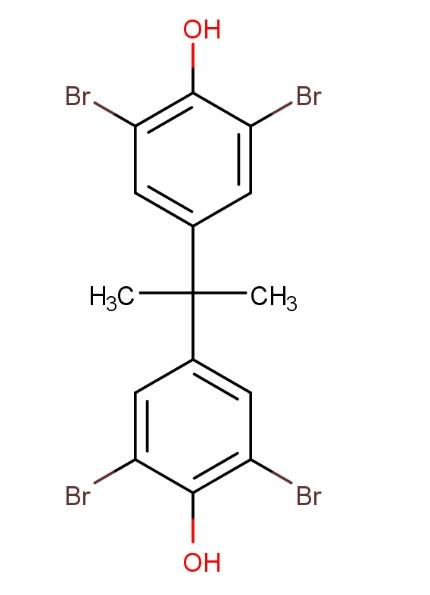
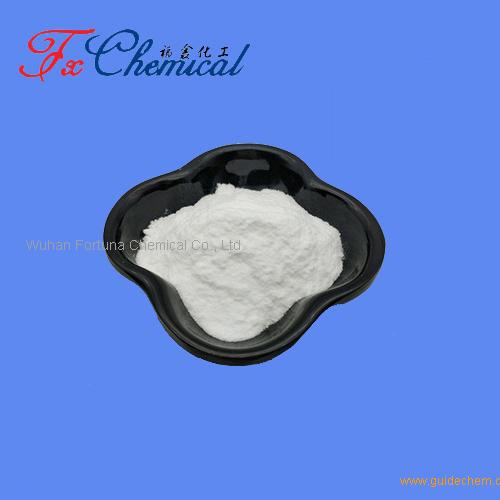
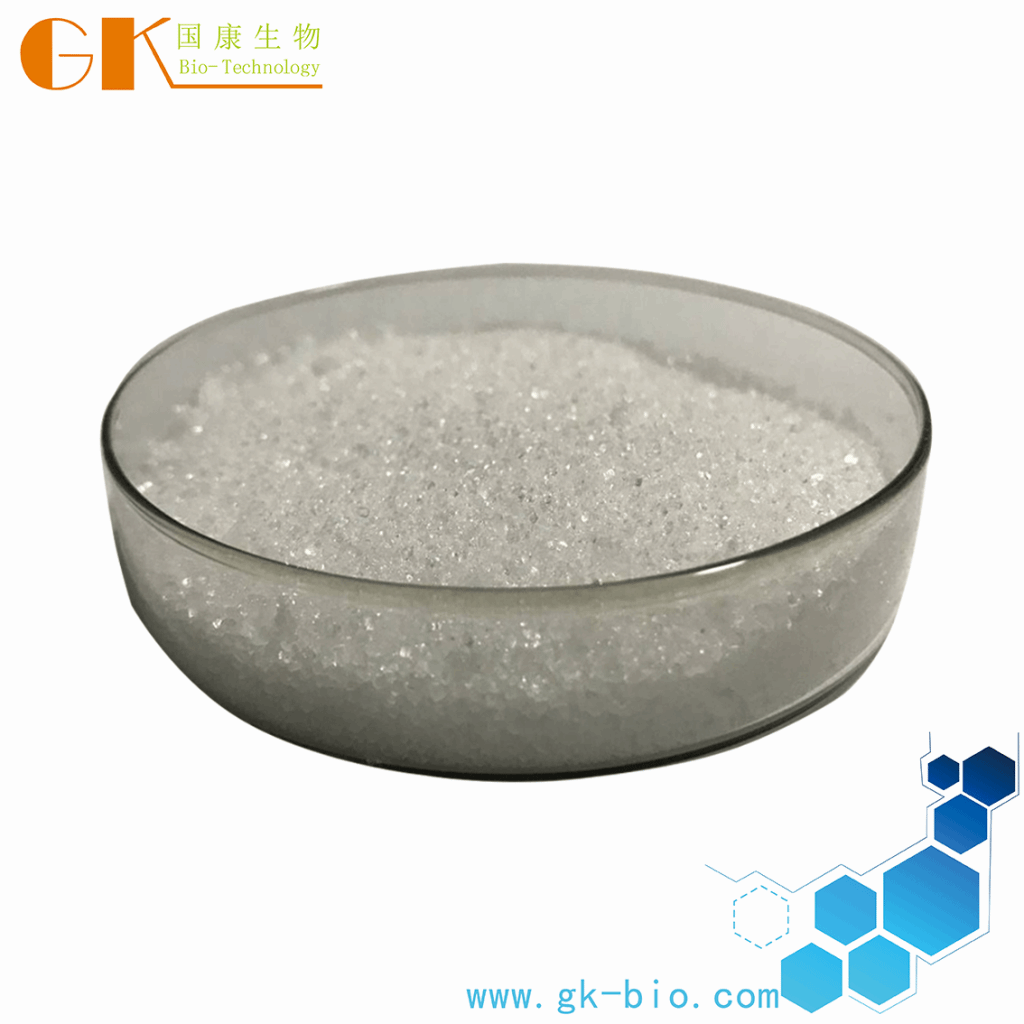
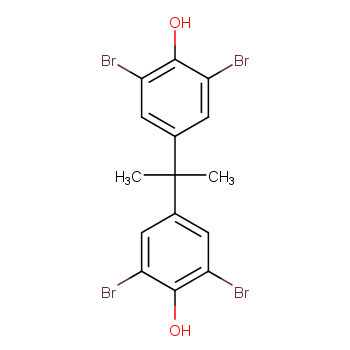
Tetrabromobisphenol A (TBBPA) is a brominated flame retardant. This compound is a white solid (not colorless), with commercial samples appearing yellow. It is one of the most common flame retardants. TBBPA is often added to polystyrene, SNA resin, and ABS resin to provide flame resistance and can serve as an intermediate for synthesizing high molecular weight brominated flame retardants.

Tetrabromobisphenol A, English name: 3,3',5,5'-tetrabromobisphenol A, Tetrabromobisphenol A cas: 79-94-7, molecular formula: C15H12Br4O2. TBBPA is a brominated derivative of bisphenol A (BPA), appearing as a white or off-white powder at room temperature. It can be used as a reactive flame retardant in the production of brominated epoxy resins or as an additive flame retardant in acrylonitrile-butadiene-styrene plastic (ABS), unsaturated polyesters, adhesives, and coatings. TBBPA has advantages such as good thermal stability, high flame-retardant efficiency, water insolubility, and corrosion resistance. However, it releases toxic gases and smoke during combustion and reduces UV stability of the flame-retarded material. Its physical and chemical properties are shown in Table 1. TBBPA has a high octanol-water partition coefficient (log Kow) and low water solubility, allowing it to persist in water, soil, and other environments. Due to Tetrabromobisphenol A solubility, TBBPA easily accumulates in organisms, causing toxic effects. A compound is considered bioaccumulative if its bioaccumulation factors (BAF) >5,000 (lg BAF>3.7) or log Kow>4. TBBPA's BAF ranges from 9.56 to 22.64, with log Kow ranging from 4.50 to 6.53, indicating significant bioaccumulation potential.


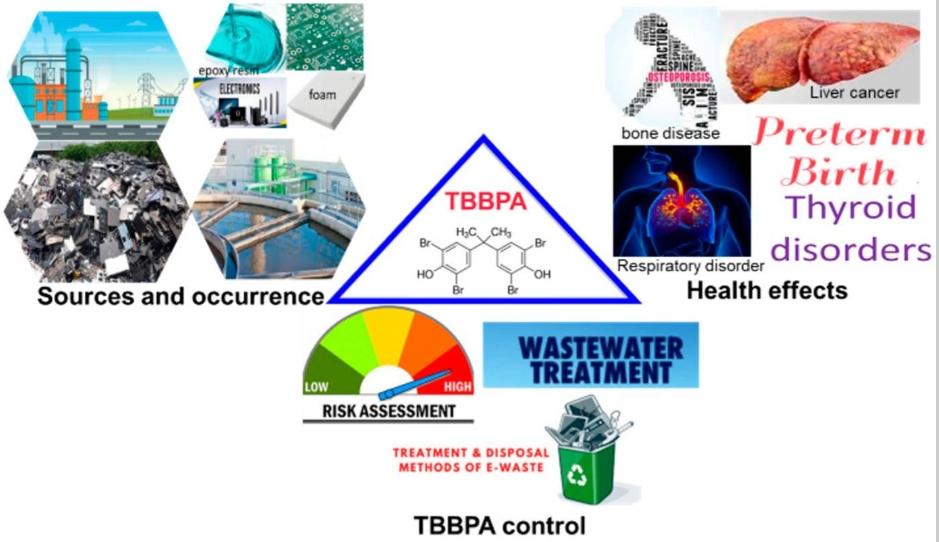
Research indicates that exposure to TBBPA may negatively impact health, potentially causing endocrine system disruptions affecting hormones and development. Children, frequently touching surfaces and putting hands in their mouths, are particularly vulnerable. To minimize exposure, regular dust removal and frequent hand washing are recommended. However, avoiding all contact with TBBPA is challenging due to its presence in many household items. Continued research is crucial to fully understand the health risks associated with TBBPA.
Tetrabromobisphenol A, a widely used flame retardant, raises environmental concerns due to its persistence. TBBPA has been detected in air, water, soil, and even human and animal tissues, indicating its ability to travel long distances and accumulate in the environment. Regulatory actions are being taken, such as California's ban on TBBPA in certain furniture and children's products. These restrictions reflect growing awareness of TBBPA's potential environmental risks.
Consult a physician. Show this safety data sheet to the attending doctor.
Move the person into fresh air. If not breathing, give artificial respiration. Consult a physician.
Wash off with soap and plenty of water. Consult a physician.
Rinse thoroughly with plenty of water for at least 15 minutes and consult a physician.
Never give anything by mouth to an unconscious person. Rinse mouth with water. Consult a physician.
Provide immediate first aid: ensure thorough decontamination. If the patient is not breathing, begin artificial respiration using a demand valve resuscitator, bag-valve-mask device, or pocket mask, and seek trained assistance. If necessary, perform CPR. Flush contaminated eyes with gently running water. Do not induce vomiting. If vomiting occurs, keep the patient leaning forward or lying on their left side with their head down to maintain an open airway and prevent aspiration. Keep the patient calm and maintain normal body temperature. Seek medical attention.
Use dry powder, foam, carbon dioxide, or Halon extinguishers to put out fires involving this chemical.
This compound is non-flammable.
If necessary, wear a self-contained breathing apparatus for firefighting.
Use personal protective equipment. Avoid dust formation. Avoid breathing vapors, mist, or gas. Ensure adequate ventilation. Evacuate personnel to safe areas. Avoid breathing dust.
Prevent further leakage or spillage if safe to do so. Do not let the product enter drains. Discharge into the environment must be avoided.
Pick up and arrange disposal without creating dust. Sweep up and shovel. Keep in suitable, closed containers for disposal.
Avoid contact with skin and eyes. Avoid formation of dust and aerosols. Avoid inhalation. Obtain special instructions before use. Provide appropriate exhaust ventilation at places where dust is formed.
Store in a cool place. Keep container tightly closed in a dry and well-ventilated place.
Safety glasses with side-shields conforming to EN166. Use equipment for eye protection tested and approved under appropriate government standards such as NIOSH (US) or EN 166 (EU).
Wear impervious clothing. The type of protective equipment must be selected according to the concentration and amount of the dangerous substance at the specific workplace. Handle with gloves. Gloves must be inspected prior to use. Use proper glove removal technique (without touching glove's outer surface) to avoid skin contact with this product. Dispose of contaminated gloves after use in accordance with applicable laws and good laboratory practices. Wash and dry hands. The selected protective gloves must satisfy the specifications of EU Directive 89/686/EEC and the standard EN 374 derived from it.
For large-scale handling, use a dust respirator.
Tetrabromobisphenol A is widely used as a flame retardant in industrial and consumer products. However, due to its potential ecological and health risks, including endocrine disruption and bioaccumulation, caution is advised in its use, considering alternatives and best practices to ensure human and environmental safety.
[1] Yao Fenghao, Wang Zeyao, Feng Zhongxiang, et al. Resource Utilization of Hydrogen Bromide for Tetrabromobisphenol A Synthesis Process [J]. Chemical Engineering, 2023, 51 (05): 8-12+69.
[2] Wang Shuang, Lu Zhen, Li Fei, et al. Pollution Status and Toxicological Research Progress of Typical Brominated Flame Retardants Tetrabromobisphenol A and Decabromodiphenylethane [J]. Journal of Ecotoxicology, 2020, 15 (06): 24-42.
[3] https://en.wikipedia.org/wiki/Tetrabromobisphenol_A
[4] https://www.guidechem.com/msds/79-94-7.html
 |
 |
 |
 |
 |
 |
 EN
EN
 Agricultural News
 Food News
 Industrial News
 Cosmetic News
 Pharmaceutical News
 Science News

 13YRS
13YRS

