
I. Executive Summary
Diethylene glycol (DEG, CAS 111-46-6, EC 203-872-2) is at once a high-volume industrial diol recovered from the ethylene oxide train and one of the most scrutinised contaminants in pharmaceutical supply chains. Co-produced with monoethylene glycol, its availability follows ethylene and MEG operating rates, not DEG demand. For 2026, model DEG as an inelastic co-product and treat grade segregation, not price, as the dominant risk variable.
Three consequences follow. DEG trade is two markets in one: a bulk commodity and a regulated channel where DEG is the analyte of record for glycerin and propylene glycol lots. After the WHO medical product alerts of 2022 and 2023 and the FDA guidance on testing high-risk drug components for DEG and ethylene glycol, batch-level limit testing became a baseline expectation. Responsibility has moved upstream: buyers require IPEC EXCiPACT certification, supplier audits and tamper-evident chain of custody.
This paper covers how DEG is made and specified, where capacity sits, which EU and US instruments apply, how packaging preserves grade integrity, and how to build an audit-ready chain based on strict pharmaceutical-grade versus industrial-grade segregation, pharmacopoeial GC limit testing, supplier audit and third-party confirmation. It contains nothing on how contamination has been introduced, and nothing that could facilitate misuse.
II. Product Deep Dive: Molecular Mechanisms and Production Evolution
2.1 Physicochemical Properties and Mechanisms
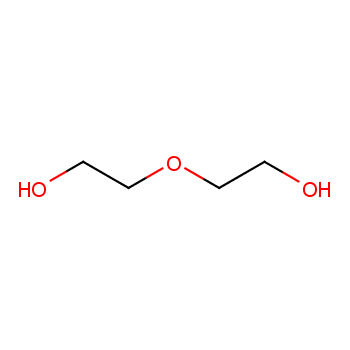
DEG is the first oligomer of the ethylene glycol series: two primary hydroxyls bridged by an ether oxygen. That linkage explains its boiling point and water affinity, the flexibility it gives condensation polymers, and its distinct toxicology. Because DEG is recovered rather than synthesised on demand, what differentiates commercial lots is homologue distribution, aldehyde content, water and colour.
- Physical Constants and Handling Signatures: Molar mass 106.12 g/mol; boiling point about 245 °C; melting point near -10 °C; density about 1.118 g/cm3 at 20 °C; viscosity about 35.7 mPa·s; closed-cup flash point roughly 143 °C; vapour pressure below 0.01 mmHg at 20 °C; log P about -1.47. Miscible with water, methanol and acetone, sparingly soluble in aliphatic hydrocarbons, and hygroscopic enough to shift water specifications during open transfers.
- Reaction Behaviour of Two Primary Hydroxyls: Both termini are primary alcohols, so esterification, etherification and isocyanate reaction proceed without the steric penalties of secondary diols. The ether oxygen improves pigment wetting, while the ether-bridged C4 segment disrupts chain packing, lowering glass-transition temperature and crystallinity and improving flexibility and hydrolytic tolerance.
2.2 Synthesis and Manufacturing Technologies
All commercial DEG originates from ethylene oxide. The water-to-EO ratio and catalyst choice determine how much forms; the finishing train and grading decision determine whether the stream meets fibre-grade, industrial or pharmacopoeial specification. It is the grading decision that carries compliance weight.
- Thermal EO Hydration and Vacuum Fractionation: Water and ethylene oxide react at about 150-200 °C under pressure with a water-to-EO molar ratio near 10:1 to 25:1, giving MEG selectivity around 90 percent and DEG about 8-10 percent. Water is removed by multi-effect evaporation and the glycols split under vacuum to limit aldehyde formation. Merchant DEG is typically 99.5 weight percent minimum; polyester-adjacent grades add UV absorbance limits at 220, 275 and 350 nm.
- Catalytic Hydration, Bio-Attributed Routes and Grading Architecture: Catalytic and carbonate-intermediate processes, in which EO is carboxylated to ethylene carbonate and then hydrolysed, raise MEG selectivity and suppress DEG; where DEG is a target, EO is fed into a monoethylene glycol loop. Bio-attributed DEG follows the bioethanol-to-bioethylene-to-bio-EO path under ISCC PLUS or RSB mass balance. Grading is downstream: dedicated tanks and hoses, validated cleaning, nitrogen padding and quarantine-until-release.
2.3 Core Application Matrix
- Polyester Polyols and Unsaturated Polyester Resins: DEG is condensed with adipic, phthalic and maleic anhydride to give polyester polyols for slabstock foam, elastomers and CASE adhesives, and unsaturated polyester resins for marine hulls, tanks, piping and gelcoats. Its ether-bridged segment lowers crystallinity and glass-transition temperature, improving impact strength and hydrolysis resistance.
- Gas Dehydration, Aromatic Extraction and Process Solvents: Glycol contactors using DEG or triethylene glycol strip water from natural gas to meet dew-point and hydrate-control specifications, with TEG preferred in modern units. DEG-water systems also serve Udex-type extraction of benzene, toluene and xylene. Further volume goes to heat-transfer fluids, printing ink and dye solvents, and fibre lubricants.
- Chemical Intermediates and Derivative Families: Esterification gives diethylene glycol dibenzoate and related phthalate-replacement plasticisers; reaction with ammonia over a hydrogenation-dehydration catalyst gives morpholine; acid cyclodehydration gives 1,4-dioxane; transesterification with allyl carbonate gives the CR-39 lens monomer. DEG must never be conflated with its ethers: DEG monomethyl ether (CAS 111-77-3) carries reproductive toxicity classification.
III. Global Market Supply-Demand Landscape and Export Trends
3.1 Demand Drivers and Market Shifts
Four engines set the 2026 tone. Unsaturated polyester resin, the largest outlet, is pulled by corrosion-resistant piping and tanks, marine and wind composites. Polyester polyol demand follows footwear and automotive interiors. Gas-processing build-out sustains demand for dehydrating glycols, while phthalate restrictions favour DEG-derived dibenzoate esters. The constraint: strong DEG demand cannot create capacity if MEG margins are weak.
3.2 Capacity Distribution and Export Flows
Capacity is inherited, not built. At roughly 8-12 percent of the mixed glycol stream, merchant DEG sits in the low-single-digit million-tonne range and tracks cracker and EO utilisation. Asia-Pacific consumes most of it, and China, combining naphtha-based and coal-to-MEG routes with large EO complexes, remains the swing buyer. Saudi complexes at Jubail and Yanbu ship ethane-based glycol east; the US Gulf Coast serves the Americas.
3.3 Market Bifurcation and Pricing Dynamics
The market is bifurcated. Bulk industrial DEG trades as a co-product proxy against Asian CFR markers, moving with ethylene, EO and MEG economics, so it can carry a premium to MEG when UPR demand is strong and a discount when polyester runs are cut. Pharmaceutical-grade material is priced instead on dedicated tankage, campaign cleaning, IPEC EXCiPACT certification, documentation, retained samples, third-party testing and liability insurance.
IV. In-depth Analysis of Global Compliance and Regulatory Barriers
DEG is a legal industrial chemical and simultaneously one of the most consequential contaminants in pharmaceutical history. Episodes traced to DEG-contaminated excipients, from the 1937 elixir sulfanilamide tragedy to the Haiti and Panama incidents and the WHO medical product alerts of 2022 and 2023, explain why regulators treat DEG as an analyte of concern. Controls are therefore asymmetric: light for intended industrial use, severe where DEG may appear as an unintended impurity.
4.1 European Market: REACH, CLP, and Sector-Specific Directives
- REACH Registration and CLP Classification: DEG (EC 203-872-2) is a registered phase-in substance, absent from the SVHC Candidate List and Annex XIV and unrestricted under Annex XVII for industrial use; the harmonised classification centres on Acute Toxicity Category 4, H302. What binds is documentary: a compliant safety data sheet with implemented exposure scenarios, plus separate cosmetic and food-contact regimes.
- Excipient GMP, Ph.Eur. DEG/EG Limits and Sampled Release: European Pharmacopoeia monographs for glycerol, propylene glycol, macrogols and sorbitol carry DEG and ethylene glycol limit tests generally set at not more than 0.1 percent by GC with flame-ionisation detection. The EU guideline on formalised risk assessment for excipient GMP requires a risk class and proportionate supplier controls, EU GMP Annex 8 governs sampling, and procurement should come from IPEC EXCiPACT-certified sites.
4.2 North American Market: TSCA, EPA, and FDA Regulations
- TSCA Status and EPA Screening: DEG is active on the TSCA Inventory, is not subject to Section 112(r), is not a listed hazardous air pollutant and carries no significant new use rule for ordinary handling. Its very low vapour pressure generally keeps it outside reactive organic compound calculations in coatings compliance, although exemption is jurisdiction-specific. Releases are managed through conventional water and air permitting.
- FDA Guidance, USP General Chapter 469 and Food-Contact Clearances: The pivotal instrument is the FDA guidance on testing glycerin, propylene glycol, maltitol solution, hydrogenated starch hydrolysate, sorbitol solution and other high-risk components for DEG and ethylene glycol, which expects identity and limit testing on every lot. USP General Chapter 469 and monograph limits of not more than 0.10 percent supply the method framework, and 21 CFR 211.84 requires per-lot testing. DEG is not GRAS.
4.3 The Critical Hurdle: Quality Control and Safety Limits
Compliance Warning: Treat any DEG quotation lacking a batch chromatogram and a closed chain of custody as unfit for regulated use. The minimum control set: pharmaceutical-grade material from an IPEC EXCiPACT-certified site; a certificate of analysis reporting GC-FID results for ethylene glycol and diethylene glycol against a not-more-than 0.10 percent criterion, plus identity and water by Karl Fischer; serialised tamper-evident seals reconciled at discharge; and independent ISO/IEC 17025 confirmation on receipt. Industrial-grade DEG must never share tankage or drum fleets with pharmaceutical glycols.
V. Green Trade Barriers and ESG in Manufacturing
DEG leaves the ethylene oxide chain as a co-product, but its cradle-to-gate burden is inherited from steam cracking, EO reaction and vacuum fractionation, so intensity is set upstream. Buyers with 2026 Scope 3 targets now demand product carbon footprints with a declared allocation method, verified bio-attributed claims and audited management systems, and exclude suppliers who cannot provide them.
5.1 Carbon Footprint and Circular Economy
Cradle-to-gate emissions are dominated by steam and power for cracking, EO reaction and purification; published figures for the ethylene oxide and glycol chain typically fall around 1-2 kg CO2e per kilogram depending on feedstock and grid mix, and DEG inherits that. Because DEG is a co-product, mass, economic or energy allocation changes the number materially and should be declared. Levers include furnace electrification, bio-attributed ethylene under ISCC PLUS or RSB, mechanical vapour recompression and regeneration of spent glycol.
5.2 Sustainable Sourcing and Traceability
Traceability has become a differentiator. Instruments include ISO 9001, ISO 14001 and ISO 45001 certification, Responsible Care and Together for Sustainability audits, EcoVadis scorecards, ISCC PLUS or RSB chain-of-custody certificates for bio-attributed lots, and GHG Protocol Scope 3 category 1 reporting. Physically, buyers should require digital batch passports, serialised seals matched to the bill of lading, ISO-tank seal telemetry and retained samples.
VI. Supply Chain Resilience and Export Logistics
DEG is a high-boiling, hygroscopic, moderately viscous liquid with no UN number and no dangerous-goods classification for road, sea or air transport. That status is often misread as low risk: in practice most losses are quality losses, from water uptake, iron pick-up, thermal damage during winter pumping, and grade cross-contamination in shared equipment.
6.1 Packaging Standards and Moisture/Contamination Control
- Materials of Construction and Moisture Control: Use mild steel or 304/316L stainless tanks; avoid galvanised surfaces, copper, brass and zinc, and specify epoxy-phenolic linings where iron pick-up or colour must be minimised. Keep headspaces dry and nitrogen-padded. Ship in 220-230 kg drums, 1000 kg IBCs, 22-25 tonne ISO tanks or 3,000-20,000 tonne parcels; DEG nears its pour point around -10 °C, so winter moves need heating or insulation.
- Dedicated Service, Seals and Batch Genealogy: Pharmaceutical-grade service requires dedicated tanks, drum fleets, hoses and pumps, or validated cleaning before campaign changeover; shared depot tanks are the commonest audit failure. Apply serialised tamper-evident seals, record numbers on the bill of lading and reconcile them at discharge. Each container needs a batch number traceable to the EO train and a lot-specific certificate of analysis.
6.2 Dangerous Goods Identification and Transit Protocols
For bulk marine parcels, require the vessel's last-three-cargoes statement and tank-cleaning certificate, with wall-wash analysis where the previous cargo is incompatible, and have surveyors witness loading and discharge. DEG is not a marine pollutant and no IMDG segregation applies, though oxidiser compatibility should be verified. The export file should hold a non-hazardous-goods declaration, local-language safety data sheet, certificate of origin, HS 2909.41 confirmation and the batch certificate of analysis.
VII. Enterprise Global Expansion Strategy Guide
Three decisions determine whether a DEG programme is defensible in 2026: structural grade separation, ownership of the analytical gate, and documentation that allocates risk to the party able to control it. Assume that an auditor will review segregation evidence and test data, not commercial terms.
- Build a Two-Track Grade Architecture: Source industrial and pharmaceutical grades through separate contractual streams, ideally from different sites, with clauses requiring dedicated tankage, no shared hoses or depot storage, serialised seals, and audit rights. Qualify at least two IPEC EXCiPACT-certified sources per region and require notice of any change in site, column, campaign or packaging contractor.
- Own the Analytical Gate: Run GC-FID in-house or contract an ISO/IEC 17025 laboratory, and validate the DEG and ethylene glycol method on ICH Q2(R2) and Q14 principles: specificity against glycerin and sorbitol matrices, detection well below the 0.10 percent limit, and system suitability. Test every lot, and add mass-balance reconciliation of inbound weight against batch yield.
- Make Documentation the Product: Require a certificate of analysis carrying the actual chromatogram, homologue profile, water by Karl Fischer, acidity and heavy metals, and register or reference a Type IV drug master file for pharmaceutical customers. Demand Scope 1, 2 and 3 carbon data plus ISCC or RSB documentation for bio-attributed lots, and allocate recall handling, liability caps and insurance in the contract.
VIII. Conclusion
Diethylene glycol will keep two identities. As an industrial intermediate it is a dependable diol whose availability follows EO and MEG economics and whose demand rests on unsaturated polyester resin, polyester polyols and gas dehydration. As a potential impurity it is the substance regulators look for first, which is why documented segregation, compendial limit testing and sealed chain of custody define market access.
The 2026 agenda is narrow but demanding: segregate industrial and pharmaceutical grades at tank level, source from IPEC EXCiPACT-certified or equivalently audited plants, require batch GC results for ethylene glycol and diethylene glycol against a not-more-than 0.10 percent criterion, confirm them at an ISO/IEC 17025 laboratory, and supply the traceability data customers request. Those who institutionalise these controls reach tenders closed to suppliers offering only price.
IX. Industry Resource Connection and Supplier Ecosystem
Powered by Guidechem
This white paper is exclusively compiled by the Guidechem Intelligence Team based on global customs data, regulatory databases, and industry research. Guidechem is a leading global B2B chemical platform, dedicated to connecting global buyers with verified, high-quality manufacturers.
Relying on Guidechem's extensive global database, we have mapped the core participants in the current global Diethylene glycol supply chain:
- China Ecosystem — Integrated EO/EG Complexes and Derivative Depth: China is the largest consumer and decisive marginal buyer of DEG. Naphtha crackers and coal-to-MEG routes feed large ethylene oxide and glycol complexes, with DEG consumed captively for resin, polyol and plasticiser production or sold domestically through trading platforms. The advantage is derivative depth: dibenzoate esters, morpholine and DEG-based polyols sit in the same clusters. Exports move in ISO tanks and 1,000-5,000 tonne parcels.
- Middle East (Saudi Arabia) Ecosystem — Ethane-Based Glycol Export Platform: Saudi Arabia is the archetypal ethane-based glycol exporter. Jubail and Yanbu complexes run by SABIC, Sadara and Petro Rabigh produce mixed glycols at world scale, shipping DEG east to China, India and Southeast Asia and west to Europe. Economics favour 10,000-20,000 tonne parcels, so buyers should plan around berth windows and summer heat and require last-three-cargo statements.
- India Ecosystem — Import-Linked Converters and Pharmaceutical-Grade Controls: India pairs sizeable domestic ethylene oxide derivative output, notably India Glycols and Reliance-linked complexes, with insufficient glycol capacity, leaving it a net importer with dense polyol, UPR and plasticiser converting capacity. Its distinctive relevance is pharmaceutical: after the 2022 and 2023 WHO alerts on DEG-contaminated paediatric syrups, buyers expect pharmacopoeial DEG and EG data, IPEC EXCiPACT certification and verifiable batch chromatograms.
Disclaimer: The content of this white paper is compiled based on public market data and regulatory information available as of 2026. Global chemical regulations are subject to dynamic adjustments. In actual export operations, enterprises must consult professional regulatory advisors or relevant competent authorities to obtain the latest compliance guidance.


 EN
EN
 Agricultural News
 Food News
 Industrial News
 Cosmetic News
 Pharmaceutical News
 Science News

 1YR
1YR


