-
We detected your language preference as English. Would you like to switch to the English version for a better experience?
Switch to English
Stay here


Magnesium carbonate is a light, white, friable solid or bulky white powder that is odorless, mildly earthy in taste and unusually absorbent. It occurs naturally as the mineral magnesite and is also found alongside dolomite and calcite, and it is used across color cosmetics, skin care and oral care because it simultaneously bulks, mattifies, absorbs and gently cleans.
For product developers, the key technical questions are not simply whether magnesium carbonate can be added to a formula, but which grade will deliver the intended texture, how its high surface area interacts with fragrance and oil loading, at what level it remains compliant in each product category, and how it behaves in pressed, loose and anhydrous systems. This guide consolidates those considerations into a practical B2B formulation framework.
| Function | Suitable Users | Core Technical Indicators | Compliance Framework |
|---|---|---|---|
| Bulking agent | Formulators of pressed and loose powders who need volume, slip and a neutral white base that dilutes color pigments without dulling them | CAS 546-93-0; white friable mass or bulky powder; low bulk density in the light grade; increases fluffiness and helps pigments disperse evenly | FDA GRAS listing and FDA Inactive Ingredients Database entry; accepted as a food additive in Europe |
| Mattifying agent | Developers of anhydrous color cosmetics, primers and setting powders where long-wear oil control and a velvety finish are the primary claims | High absorbency delivers a lasting matte effect; mitigates syneresis and supports high oil loading in anhydrous bases | Category-specific maximum usage levels apply; verify current limits per product type |
| Absorbent / fragrance carrier | Formulators working with perfumed powders who must incorporate fragrance uniformly without lumps or localized wet spots | Porous structure creates very high surface area; absorbs more oil and excess moisture than many common alternatives | No pre-mixing claim required, but fragrance addition order affects batch uniformity |
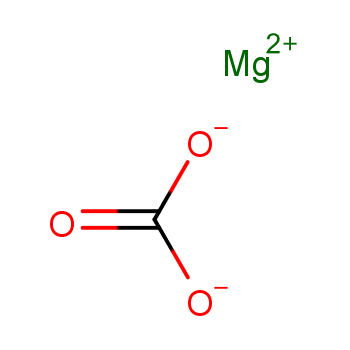
Magnesium carbonate is an inorganic salt that is not a single homogeneous substance. Depending on the manufacturing route, it can be produced as the normal hydrate, the basic hydrate or, rarely, the anhydrous material MgCO3. This variability is central to its technical behavior, because the ratio of carbonate to hydroxide and the degree of hydration determine bulk density, absorbency and texture.
The United States Pharmacopeia describes magnesium carbonate as either a basic hydrated magnesium carbonate or a normal hydrated magnesium carbonate. The main differences between the two lie in their chemical formulas and their intended uses: the basic hydrated form is common in medical and industrial applications, while the normal hydrated form is more frequently used in consumer products and cosmetics. Basic magnesium carbonate is probably the most common commercial form and varies between light magnesium carbonate, (MgCO3)3Mg(OH)2·3H2O, and magnesium carbonate hydroxide, (MgCO3)4Mg(OH)2·5H2O.
The European Pharmacopoeia recognizes the two basic grades under separate monographs. Heavy magnesium carbonate is a tetrahydrate with the formula [(MgCO3)3Mg(OH)2·4H2O] and a molecular weight of 383.32 g/mol, while light magnesium carbonate is a trihydrate with the formula [(MgCO3)3Mg(OH)2·3H2O] and a molecular weight of 365.30 g/mol. The anhydrous salt has a molar mass of 84.31 g/mol, the value most often quoted when only the parent compound is referenced.
Explore the magnesium carbonate technical encyclopedia for additional chemical and application information.
| Parameter | Specification / Description |
|---|---|
| Chemical name | Magnesium carbonate |
| Common names | Magnesite, magnesium carbonate hydroxide, basic magnesium carbonate, normal hydrated magnesium carbonate |
| Molecular formula | MgCO3 (anhydrous); basic hydrates vary, for example (MgCO3)3Mg(OH)2·4H2O |
| Molecular weight | 84.31 g/mol (anhydrous); 365.30 g/mol (light trihydrate); 383.32 g/mol (heavy tetrahydrate) |
| CAS Number | 546-93-0 |
| EC number | 208-915-9 |
| Appearance at 25 °C | White, yellowish, grayish-white or brown crystalline powder; hygroscopic |
Magnesium carbonate is not a reactive active in the sense of a preservative or a peeling acid. Its contribution is physical, and it depends almost entirely on the enormous surface area created by its porous particle structure. Understanding this helps formulators predict how it will change a formula's texture, oil balance and pigment behavior.
The porous structure of magnesium carbonate gives the material an enormous amount of surface area, which in turn allows it to absorb more oil and excess moisture than other commonly used ingredients. This absorptive capacity is what enables oil control and helps prevent syneresis, the separation of liquid from a gel or paste, in high-oil anhydrous systems.
Because magnesium carbonate is typically white, it dilutes color without introducing a strong hue of its own, and because the material is semi-translucent on the skin it does not look chalky in the way a coarser opacifier might. It contributes slip and consistency to powders, increases fluffiness and helps facial powders adhere to the skin, which is why it appears so often in pressed and loose color products.
In dentifrices, magnesium carbonate contributes to the physical cleaning effect and stain removal, and it also helps increase the gloss of the teeth because finely ground particles clean and remove discoloration to a certain extent without damaging or wearing away enamel. In skin care, the basic grade is used as a clay in face masks and exhibits mild astringent properties that smooth and soften skin.
Magnesium carbonate is produced synthetically and from natural minerals, and the chosen route determines whether the output is a light or heavy grade. The light grade is typically manufactured by saturating an aqueous suspension of dolomite, CaMg(CO3)2, with carbon dioxide under pressure. As the temperature rises, calcium carbonate precipitates almost entirely; the filtered solution is then heated to boiling, the magnesium bicarbonate loses carbon dioxide and water, and light magnesium carbonate precipitates as a fine, low-density solid.
The heavy grade follows a different path. It may be manufactured by mixing a hot concentrated solution of magnesium chloride or magnesium sulfate with a solution of sodium carbonate, and the resulting material is either precipitated to produce a granular product or spray-dried. Because the two routes produce particles of very different size and structure, the light and heavy grades cannot be treated as interchangeable in a formula even though they share a chemical family.
For formulators, the critical qualification points are grade identity, bulk and tapped density, moisture content and the absence of mineral impurities carried through from the feedstock. Buyers should confirm that the material is supplied as a cosmetic or pharmaceutical grade rather than an industrial technical grade.
From a formulation perspective, the most useful comparison is among magnesium carbonate and the other inorganic powders it substitutes for or is blended with, rather than among unrelated chemical families. The three commonly discussed categories are magnesium carbonates, other inorganic absorbents and mineral diluents.
Within the family, the meaningful distinction is between the light and heavy forms. Light magnesium carbonate is used to increase fluffiness and aid fragrance absorption, and its low density makes it valuable where a light, airy powder is the goal. Heavy magnesium carbonate is denser and more granular, which changes how much volume a given mass contributes and how the powder presses.
Magnesium carbonate competes functionally with materials such as silica and aluminum starch octenylsuccinate, which also control oil and improve texture. Formulators frequently combine them, because the optical properties and the absorbency-to-density ratio differ, and using more than one absorbent often gives a better balance of matte finish and skin feel than a single high-dose material.
Because it is white and chemically inert, magnesium carbonate also acts as a diluent and pigment base, which places it near traditional mineral diluents in a formulation map. The difference is that it is semi-translucent rather than strongly opaque, so it supports color rather than flattening it.
| Parameter | Magnesium Carbonate | Silica | Talc |
|---|---|---|---|
| CAS number | 546-93-0 | 7631-86-9 | 14807-96-6 |
| Chemical type | Inorganic basic carbonate salt; porous, semi-translucent | Amorphous or fumed silicon dioxide; very high oil absorption | Hydrated magnesium silicate; platy, opaque |
| Primary role | Bulking, mattifying and fragrance absorption in powders | Thickener, anti-caking and matting agent at very low levels | Extender, opacifier and slip agent |
| Optical behavior | Semi-translucent on skin; supports color without flattening | Essentially transparent when dispersed | Opaque white; can dull saturated colors |
| Typical powder level | 1–3% in loose face powder; up to 30–40% in toothpaste | Often below 1% in color cosmetics | 10–15% in talcum-type powders |
| Key limitation | Hygroscopic and prone to caking if stored damp | Can be difficult to wet out and dusts heavily | Consumer perception concerns in some markets |
| Property | Typical Description |
|---|---|
| Appearance at 25 °C | White, yellowish, grayish-white or brown crystalline powder; hygroscopic |
| Odor | Odorless, with a slightly earthy taste |
| Solubility | Practically insoluble in water, acetone and ammonia; dissolves in diluted acids with effervescence |
| Density at 25 °C | 2.958 g/cm3 (anhydrous); relative density 2.95 (water = 1) |
| Bulk density (untapped) | 0.42 g/cc, rising to 0.55 g/cc after 1000 taps |
| Melting point | Approximately 350 °C |
| Refractive index | 1.717 (anhydrous) |
| Shelf life | 24–36 months when stored in the original package, tightly sealed in a dry, well-ventilated place |
| Product Type | Typical Examples | Key Formulation Objective |
|---|---|---|
| Primers | Face primers, primer sticks and pore-minimizing mousses | Provide oil control and a smooth, matte base that improves makeup wear |
| Lip color | Matte lip color and long-wear lip products | Absorb excess oil to sustain a matte finish without drying the color |
| Powders | Setting powders, finishing powders, powder blushes, highlighters and contour powders | Add fluffiness, carry fragrance and deliver pigment with good adhesion |
| Foundation | Matte foundation sticks and powder foundations | Balance high oil loading, prevent syneresis and control shine over time |
| Hair care | Dry shampoo and aerosol color hair sprays | Absorb sebum at the scalp and support pigment delivery from aerosol systems |
| Oral care | Toothpaste and other dentifrice products | Clean teeth, remove stain and contribute gloss without abrasive enamel damage |
Magnesium carbonate has proven useful in a wide range of color cosmetic applications, including pressed, loose and liquid formulations, and it also appears in skin care masks and oral care. Because the same material serves several functions at once, a single addition can simplify a formula, but the grade and level must be chosen against the dominant requirement of that product.
Begin by choosing light or heavy magnesium carbonate according to the target texture. Light magnesium carbonate increases fluffiness and aids fragrance absorption, while heavy magnesium carbonate is denser and more granular. Because their molecular weights and particle structures differ, selecting on price alone frequently leads to an unexpected change in fill weight or press behavior.
Magnesium carbonate is often used to absorb fragrance prior to mixing. The fragrance should first be added to the magnesium carbonate part of the formulation so that it is absorbed uniformly, leaving no lumps, before that pre-blend is added to the overall formulation. This controls the risk of localized wet spots and uneven scent throw.
In hot-process powder systems, magnesium carbonate is typically combined with the oil phase and heated before the absorbent fillers and pigments are added. Keeping the batch uniform at temperature and then cooling before filling supports a consistent pressed texture and helps avoid striation or excess dusting.
Because the material is hygroscopic, batching areas, storage and packaging should limit exposure to moisture. Confirming that the incoming material is within its moisture specification, and closing containers promptly after weighing, protects both the absorbency and the flow behavior of the finished powder.
The following formulation is an illustrative cream-to-powder foundation built from the published phase structure of a representative magnesium carbonate system. It is a technical example rather than a universal commercial recipe, and actual ingredient levels must be recalculated according to the texture, stability and pigment requirements of each project.
| Phase | Ingredient (INCI) | Illustrative Quantity | Technical Role |
|---|---|---|---|
| A | Octyl Palmitate | 18.75% | Emollient ester providing slip and a dry skin feel |
| A | Octyldodecanol | 15.75% | Emollient alcohol contributing spreadability |
| A | Isopropyl Myristate | 12.60% | Light emollient that aids pigment wetting |
| A | Hydrogenated Coco-Glyceride | 10.50% | Structuring wax that builds the solid matrix |
| A | Candelilla Wax | 10.50% | Vegetable wax contributing firmness and pay-off |
| A | Carnauba Wax | 1.00% | High-melting wax raising the drop point and gloss |
| A | Magnesium Carbonate | 1.00% | Mattifying and oil-absorbing agent within the oil phase |
| A | Tocopheryl Acetate | 0.50% | Antioxidant protecting the oil phase against rancidity |
| A | Dimethicone | 0.50% | Silicone improving glide and water resistance |
| A | Propylparaben | 0.10% | Oil-phase preservative |
| B | Aluminum Starch Octenylsuccinate and Lauroyl Lysine | 18.40% | Absorbent filler improving cushion and texture |
| B | Silica | 0.25% | Anti-caking and flow aid |
| B | Methylparaben | 0.15% | Preservative for the powder phase |
| C | Fluorphlogopite and Titanium Dioxide (and Iron Oxides) | 10.00% | Pearl and pigment blend delivering color and luminosity |
Processing follows a straightforward hot-pour sequence: combine the Phase A ingredients, heat to 80 °C, add Phase B and mix until uniform at 80 °C, then add Phase C until uniform. Cool to 70 °C and pour into pans, then allow the product to cool to room temperature. Each stage should be held long enough to guarantee uniformity, since incomplete dispersion of the absorbent is a common cause of surface defects.
Regulatory treatment of magnesium carbonate depends on the intended use of the finished product and on the grade supplied. A supplier's statement that a material is a cosmetic grade does not by itself establish compliance in every destination market, and maximum use levels are frequently set by product category rather than by substance alone.
| Market / Framework | Technical Relevance | Compliance Action |
|---|---|---|
| United States FDA | Magnesium carbonate is included in the FDA Inactive Ingredients Database for oral capsules and tablets and is listed as a GRAS chemical. | Confirm the material meets the applicable purity and labelling expectations for the intended product category. |
| European Union | Magnesium carbonate is accepted as a food additive in Europe and is widely used in cosmetic products under the general framework of Regulation (EC) No 1223/2009. | Verify current Annex status and any category-specific restrictions in the target market before commercialization. |
| United Kingdom | Magnesium carbonate is included in nonparenteral medicines licensed in the UK, reflecting its long-established safety profile as an excipient. | Check post-transition UK cosmetic requirements, which may diverge from EU positions over time. |
| Category use levels | Published usage levels range from 1 to 3 percent in loose face powder used as a perfume absorbent, 30 to 40 percent in toothpaste, 10 to 15 percent in talcum powder and above 0.18 percent in aerosol color hair sprays. | Treat these figures as historical reference points and confirm current limits against the applicable legislation. |
| Good manufacturing practice | Because the material is hygroscopic, moisture control and traceability are the principal manufacturing controls affecting quality. | Maintain supplier qualification, certificate-of-analysis review and environmental controls over humidity and storage. |
Magnesium carbonate has a long history of use as a pharmaceutical excipient and food additive, and its safety profile in cosmetics is supported by that established history rather than by a single high-profile dossier. It is chemically inert under normal formulation conditions, practically insoluble in water and not associated with the sensitization concerns that complicate the use of some legacy preservatives.
The principal practical safety consideration is not systemic toxicity but the physical behavior of the powder. Because it is fine and can become airborne during handling, dust control and appropriate industrial hygiene measures are advisable in batching operations. For products intended for oral use, the grade and purity must be appropriate to the dosage form.
For product developers, the most important principle is to separate material safety from product claims. A cosmetic product containing magnesium carbonate should not be marketed with unsupported claims that imply treatment or prevention of disease, and any safety statement should be traceable to a current regulatory position.
Magnesium carbonate is generally used as a functional excipient rather than as an active claim ingredient. Its recommended use therefore depends on the physical role it must play in the formula rather than on a therapeutic dose. The following framework summarizes how the material is typically positioned across categories.
| Application Area | Typical Use Level | Functional Objective |
|---|---|---|
| Loose face powder | 1–3% | Perfume absorbent and light bulking agent |
| Toothpaste | 30–40% | Abrasive cleaning, stain removal and gloss |
| Talcum powder | 10–15% | Bulking and moisture absorbance |
| Aerosol color hair spray | Above 0.18% | Pigment support and delivery from aerosol systems |
Note: The levels above are drawn from historical patent and technical references and are provided as a practical orientation only. They are not regulatory maxima and should be verified against current requirements for each market.
Light magnesium carbonate is usually preferred in loose powders because it increases fluffiness, aids fragrance absorption and contributes a light, airy texture. Heavy magnesium carbonate is denser and more granular and suits applications where a firmer press is desired.
The fragrance should first be mixed into the magnesium carbonate portion so that it is absorbed uniformly without lumps, and that pre-blend should then be incorporated into the broader formulation. Adding fragrance directly to the finished powder risks localized wet spots and caking during storage.
Its porous structure creates a very high surface area, which allows it to absorb more oil and excess moisture than many common alternatives. In anhydrous color cosmetics this absorptive capacity provides a long-lasting matte effect, helps mitigate syneresis and supports high oil loading in the finished product.
The material should be kept in its original package, tightly sealed, in a dry, well-ventilated place. Exposure to moisture may cause caking, so humidity control protects both the flow properties and the absorbency of the powders made from it.
| Identifier | Value | Resource |
|---|---|---|
| Chemical name | Magnesium carbonate | Technical encyclopedia |
| CAS Number | 546-93-0 | Chemical dictionary |
| CAS product lookup | 546-93-0 | Supply search |
| Supplier / trade search | 546-93-0 | Supplier search |
1. Cosmetic Ingredient Review. Safety Assessment of Carbonate Salts as Used in Cosmetics.
2. International Labour Organization. International Chemical Safety Cards - Magnesium Carbonate.
3. European Chemicals Agency. Substance information for magnesium carbonate.
4. U.S. Food and Drug Administration. Inactive Ingredient Database and GRAS listings.
5. European Pharmacopoeia. Monographs for Heavy Magnesium Carbonate and Light Magnesium Carbonate.
6. United States Pharmacopeia. Monograph on basic and normal hydrated magnesium carbonate.
7. Handbook of Pharmaceutical Excipients. Magnesium Carbonate Heavy.
8. Electronic Code of Federal Regulations. Magnesium carbonate provisions.
 |
|
 |
 |
 |
|
 EN
EN
 Agricultural News
 Food News
 Industrial News
 Cosmetic News
 Pharmaceutical News
 Science News

 1YR
1YR

