September 10, 2026 chemical market update: DMSO surged 12.44%, Ethyl acetate rose 9.86%, and Isopropyl alcohol gained 8.81%, while energy, solvents, aromatics, and plastics strengthened.GuideView10 MIN READSeptember 10, 2026
Daily Chemical Market Price Overview — September 10, 2026
The latest daily chemical price update highlights significant movements across major sectors including
Basic Chemicals,
Fine Chemicals,
Energy, and
Plastics. This report summarizes daily, weekly, and monthly price fluctuations to help manufacturers, traders, and procurement professionals better track short-term market volatility and broader pricing trends across the chemical supply chain.
Market focus today centered on a broad
energy-driven rally, with crude oil, aromatics, solvents, and several plastics posting strong gains amid heightened
Middle East geopolitical tensions and growing supply risks around the Strait of Hormuz. Among individual products,
Dimethyl sulfoxide, Ethyl acetate, and Isopropyl alcohol recorded the largest daily increases, while ABS and Asphalt maintained particularly strong monthly momentum. Fine Chemicals remained more fragmented, with product-specific supply and downstream demand creating significant differences across individual markets.
Dimethyl sulfoxide recorded the strongest daily increase across all monitored products, surging 12.44% to CNY 12,200/ton. The unusually sharp one-day move, compared with only 1.12% weekly and 1.16% monthly gains, points to a sudden tightening in spot availability and active replenishment rather than a prolonged sector-wide uptrend. DMSO is widely used in pharmaceuticals, electronics, agrochemicals and specialty chemical synthesis, making short-term changes in producer availability and spot inventories particularly important. The magnitude of the move suggests that buyers should closely monitor whether the rally continues or partially corrects after the initial supply-driven jump.
Price surged 12.44% today — Sharp spot-market tightening and replenishment activity make DMSO the key product to monitor.
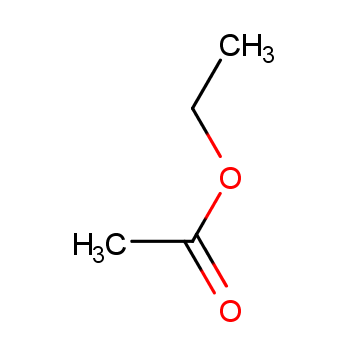
Ethyl acetate posted the second-largest daily increase, climbing 9.86% to CNY 6,463/ton. The rally reflects a combination of stronger upstream feedstock costs and firmer spot-market sentiment. Acetic acid and ethanol, the key upstream materials for ethyl acetate production, both remained supported, while the broader energy and petrochemical complex strengthened sharply as crude oil prices moved higher amid elevated Middle East supply risks. Despite the strong daily increase, the weekly and monthly gains were only 2.78% and 3.84%, respectively, suggesting that the latest move represents a rapid short-term repricing rather than an established long-term uptrend.
Price surged 9.86% today — Rising feedstock costs and stronger solvent-market sentiment are supporting near-term prices.
Isopropyl alcohol rose 8.81% to CNY 9,067/ton, recording the third-largest daily gain across the monitored markets. The sharp increase was supported by stronger propylene and acetone prices, both of which strengthened significantly as the oil-linked chemical complex rallied. The latest price also places IPA at a relatively elevated level, with the market gaining 7.42% over the week and 5.32% over the month. Current market data show the September 10 price at CNY 9,067/ton, up 734 CNY/ton from the previous day, confirming the unusually strong daily move. The combination of higher feedstock costs, firmer solvent demand and elevated spot pricing suggests that IPA remains one of the most active products in the current chemical-market rally.
Price surged 8.81% today — Strong upstream propylene and acetone prices are reinforcing the upward pressure on IPA.
Basic chemicals strengthened broadly on September 10, with
Acetone, Benzene, Ethyl acetate, Isopropyl alcohol, and Phenol among the strongest gainers. The rally was primarily driven by a sharp increase in upstream energy and feedstock costs, as escalating
U.S.-Iran tensions and disruptions around the Strait of Hormuz pushed Brent crude above $100/bbl and triggered a broad risk premium across the petrochemical chain. Chinese independent refiners have also been actively sourcing alternative crude from West Africa, Canada, and South America amid tighter Middle East and sanctioned Russian supply, further supporting physical crude premiums and downstream chemical costs. :contentReference[oaicite:1]{index=1}
Benzene rose 6.94% to CNY 9,768/ton, while Toluene and Xylene increased 4.73% and 2.39%, respectively, reflecting the sharp strengthening of the aromatics complex. Domestic futures trading reinforced the move, with benzene hitting the daily limit of 6% on September 10 and other energy-chemical contracts including propylene and ethylene glycol also posting solid gains. :contentReference[oaicite:2]{index=2} This stronger aromatics cost base helped lift downstream Acetone by 6.87% and Phenol by 6.05%, while Acetone has now gained 16.69% over the month, indicating that the current rally is more than a one-day correction.
Solvents and oxygenated chemicals also performed strongly.
Ethyl acetate jumped 9.86%,
Isopropyl alcohol increased 8.81%, and
Dichloromethane gained 5.75%, as higher crude and feedstock costs combined with tighter spot availability and improved producer price sentiment. Isopropyl alcohol reached CNY 9,067/ton on September 10, with the market already at a high level compared with its recent average. :contentReference[oaicite:3]{index=3} Meanwhile,
Methanol edged up 0.54% on the day but retained a particularly strong 24.71% monthly increase. Market sources attributed the methanol rally to Middle East supply concerns, lower Iranian operating rates and disrupted imports through the Strait of Hormuz, although weak downstream MTO demand and the expected restart of Chinese coal-based capacity could limit further upside. :contentReference[oaicite:4]{index=4}
Acetic acid and Acetic anhydride also remained firm, rising 2.70% and 1.16% respectively. Acetic acid quotations across Chinese regions and producers remained elevated on September 10, while market commentary indicated that strong upstream acetic acid support was keeping Acetic anhydride producers in a firm pricing stance, although the latter was already showing signs of limited upside after reaching relatively high levels. :contentReference[oaicite:5]{index=5} Ethylene glycol rose 1.68% to CNY 6,592/ton and remained one of the stronger monthly performers at +19.95%, with spot prices in Zhangjiagang also moving higher amid elevated crude oil prices. :contentReference[oaicite:6]{index=6}
By contrast, several products showed weaker momentum despite the broad petrochemical rally.
Cobalt fell 2.30% on the day and was down 5.88% over the month, while
Phosphoric Acid declined 0.30% and remained 1.85% lower monthly.
Sulfur edged up only 0.30% but was still down 8.81% over the month, suggesting that not all inorganic chemical markets are benefiting from the energy-led rally; the September 10 sulfur benchmark remained below its level at the beginning of the month. :contentReference[oaicite:7]{index=7}
Urea and
White phosphorus also eased slightly, indicating relatively limited demand-side momentum in some fertilizer and inorganic segments.
PET rose 3.45% to CNY 8,578/ton and gained 8.60% over the month, although the market faces a new external risk: EU countries are preparing to seek safeguard measures, including possible quotas or tariffs, on chemical and plastic imports such as PET, particularly from China. The move reflects European concerns over high energy costs, weak domestic demand and increased imports, and could become an important medium-term factor for Chinese PET export margins and trade flows. :contentReference[oaicite:8]{index=8} Overall, the September 10 market was characterized by a strong cost-driven petrochemical rally, with aromatics, solvents and oil-linked intermediates leading gains, while demand-sensitive and non-oil-linked products remained comparatively mixed. Near-term chemical prices are likely to remain supported by elevated crude oil and geopolitical risk, but the sustainability of the rally will depend increasingly on downstream demand and whether Middle East supply disruptions persist.
Fine chemicals showed a highly divergent performance on September 10, with
Dimethyl sulfoxide (DMSO) surging 12.44% to CNY 12,200/ton, while
Potassium permanganate declined 1.59% and
PTMEG remained under pressure despite a marginal daily increase. The overall market was therefore characterized more by product-specific supply and inventory conditions than by a broad-based sector rally. Meanwhile, the sharp rise in crude oil and renewed supply-chain disruptions in the Middle East continued to provide a supportive cost backdrop for oil-linked chemicals. Brent crude remained above $100/bbl on September 10 amid renewed U.S.-Iran tensions and disruptions around the Strait of Hormuz, increasing the risk premium across global chemical feedstocks. :contentReference[oaicite:0]{index=0}
Dimethyl sulfoxide (DMSO) was the clear outperformer, jumping 12.44% in a single day to CNY 12,200/ton. The magnitude of the move stands out because its weekly and monthly gains were only 1.12% and 1.16%, respectively, suggesting that the September 10 spike was driven primarily by a short-term tightening in the spot market rather than a prolonged uptrend. DMSO is an important polar aprotic solvent used in pharmaceuticals, electronics, agrochemicals and other specialty applications, meaning that changes in producer availability and spot inventory can have an outsized impact on quoted prices. The sharp one-day increase should therefore be interpreted cautiously: if downstream procurement does not accelerate, part of the increase could prove temporary.
Melamine remained comparatively stable at CNY 6,250/ton, rising only 0.19% on the day and 0.48% over the week, while the monthly change was slightly negative at -0.16%. The relatively weak momentum contrasts with the strong increases seen in several oil-linked chemicals and indicates that the melamine market has not yet received the same degree of cost-driven support. Since melamine is closely linked to the urea value chain, its price performance is influenced more by fertilizer-sector supply, operating rates and downstream demand for melamine-formaldehyde resins than by crude oil alone. The current data therefore point to a relatively balanced market, with limited evidence of a sustained shortage.
Potassium permanganate fell 1.59% to CNY 15,500/ton and recorded virtually no change on either a weekly or monthly basis. The lack of momentum suggests that the market remains largely range-bound, despite continuing volatility elsewhere in the chemical sector. Potassium permanganate is primarily an inorganic oxidizing agent with applications including water treatment, disinfection, chemical processing and laboratory uses. Its relatively limited sensitivity to crude oil prices means that the recent oil rally has had less direct transmission into this market. :contentReference[oaicite:1]{index=1}
PTMEG increased 0.98% on September 10 to CNY 17,167/ton, but the broader trend remained weak: the product was down 0.16% on a weekly basis and, more importantly,
8.23% lower over the month. The modest daily rebound therefore appears more consistent with a technical correction or short-term replenishment than with a fundamental trend reversal. PTMEG is an important raw material for spandex and other polyurethane-related applications, so its medium-term pricing remains closely connected to downstream textile demand and the broader polyurethane chain. The combination of a small daily rebound and a substantial monthly decline suggests that buyers may still be cautious and that inventories remain an important factor to monitor.
Trichloroethylene (TCE) rose 2.91% to CNY 4,700/ton, although the product remained down 0.47% for the week and 1.13% for the month. The daily increase therefore represents a recovery from recent weakness rather than evidence of a fully established uptrend. TCE is primarily used as a chlorinated solvent and industrial degreasing agent, so its price is influenced by chlor-alkali and chlorinated-solvent supply conditions as well as industrial demand. The September 10 rebound may indicate firmer spot sentiment, but the negative weekly and monthly performance suggests that downstream purchasing has not yet generated a strong sustained upward cycle.
Overall,
Fine Chemicals were significantly more fragmented than Basic Chemicals on September 10. DMSO's exceptional 12.44% daily increase was the major market signal, while Melamine and Potassium permanganate remained broadly stable and PTMEG continued to reflect the weakness of its recent trend. TCE also rebounded, but its negative weekly and monthly changes indicate that the recovery remains tentative. Against the backdrop of
Brent crude remaining above $100/bbl and heightened geopolitical supply risks, oil-linked specialty chemicals may continue to receive cost support, but the performance of these five products indicates that
product-specific supply, inventory and downstream demand will remain the decisive factors for the Fine Chemicals segment. :contentReference[oaicite:2]{index=2}
Energy markets remained the strongest segment on September 10, with WTI Crude Oil rising 3.23% to USD 96/barrel and gaining 10.98% over the month.
Asphalt increased 3.08% to CNY 5,590/ton and was up 18.75% monthly, while
Gasoline rose 2.19% and gained 10.91% over the same period. The broad-based strength was primarily driven by escalating
Middle East geopolitical tensions, tanker attacks and growing concerns over crude supply disruptions around the Strait of Hormuz. International oil prices moved sharply higher on September 10, with Brent and WTI both briefly moving above USD 100/barrel, while domestic SC crude futures gained more than 6%. The resulting increase in feedstock costs and supply-risk premiums provided broad support to energy products and oil-linked chemicals.
Asphalt was one of the strongest performers in the Energy segment, rising 3.08% on the day, 4.73% over the week and 18.75% over the month. The combination of higher crude oil prices and stronger domestic energy futures provided direct cost support, while the September 10 rally in domestic commodity markets saw asphalt futures rise more than 3%. The strong monthly performance indicates that the current move is not merely a one-day reaction to geopolitical news, but reflects a broader repricing of energy-related products. However, with crude oil markets already experiencing a significant geopolitical risk premium, further gains in Asphalt will increasingly depend on whether supply disruptions persist and whether downstream infrastructure and seasonal demand can absorb higher prices.
Gasoline rose 2.19% to CNY 10,040/ton and remained firmly in an upward trend, with weekly and monthly gains of 1.57% and 10.91%, respectively. The product is benefiting directly from higher crude oil input costs and elevated refining margins and supply-risk expectations. The broader oil market has been supported by renewed attacks involving shipping around the Middle East, while Chinese refiners have been actively seeking alternative crude supplies from West Africa, Canada and South America as traditional Middle Eastern and sanctioned Russian supplies become more difficult to secure. This shift has pushed spot crude premiums higher and could continue to support domestic refined-product prices in the near term.
Kerosene also increased 2.44% on September 10 to CNY 8,400/ton, although its weekly and monthly performance remained slightly negative at -0.49% and -0.46%. This divergence suggests that the latest move is more of a short-term energy-cost rebound than a confirmed structural uptrend. Compared with Gasoline and Asphalt, Kerosene has so far shown weaker cumulative momentum, indicating that demand-side factors remain more restrictive. If the crude rally persists, however, higher feedstock and transportation costs could gradually improve the support for the product.
The
Plastics market also strengthened, but performance varied considerably by product.
ABS was the strongest representative product, rising 3.86% to CNY 11,667/ton and gaining 12.70% over the month.
HDPE increased 1.60% on the day and 3.60% monthly, while
PVC edged down 0.41% but remained 8.80% higher than one month earlier. The divergence indicates that the current plastics rally is being driven primarily by higher upstream energy and petrochemical costs rather than by uniformly strong downstream demand. Domestic chemical futures reflected the same pattern, with plastic-related contracts including plastics, polypropylene and bottle-grade PET moving higher on September 10.
ABS stands out as the key product to monitor within Plastics. Its 12.70% monthly increase is substantially stronger than HDPE's 3.60% gain, suggesting that ABS is receiving stronger cost and supply-side support. ABS is closely linked to the styrene and aromatics chain, which has been particularly strong during the latest oil rally. On September 10, domestic pure benzene futures reached the daily limit and styrene gained more than 5%, providing significant upstream cost support for ABS. This combination of higher crude oil, stronger aromatics prices and firm intermediate costs creates a favorable short-term pricing environment for ABS, although downstream demand remains an important constraint.
HDPE rose 1.60% to CNY 11,100/ton and posted a more moderate 3.60% monthly increase. The move is consistent with the broader recovery in oil-linked polymers, but the relatively smaller monthly gain compared with ABS suggests that HDPE has not experienced the same degree of supply or cost pressure. Market quotations on September 10 showed selected HDPE grades moving higher, particularly injection-molding and wire-drawing grades, although several mainstream film and hollow grades remained unchanged. This indicates that the market is firming rather than experiencing a generalized shortage.
PVC was the exception, declining 0.41% on the day to CNY 4,910/ton despite remaining 4.38% higher weekly and 8.80% higher monthly. The negative daily movement highlights the difference between PVC and the more directly oil-linked plastics. PVC pricing is influenced not only by energy costs but also by coal, electricity, chlor-alkali economics and construction-related demand. The recent monthly rally therefore appears to have incorporated a substantial amount of cost support already, while the small daily decline suggests some consolidation after the earlier advance.
Overall,
Energy remains the strongest market driver, with WTI Crude Oil, Asphalt and Gasoline showing double-digit monthly gains. The key near-term catalyst is still
geopolitical supply risk in the Middle East: oil prices have moved sharply higher as attacks on tankers and disruptions around major shipping routes raise concerns over global crude availability. At the same time, Chinese refiners are increasing purchases from alternative origins, reinforcing physical-market premiums. For Plastics, higher oil and aromatics costs are providing a strong floor, with
ABS currently showing the strongest momentum, followed by PVC and HDPE. However, the sustainability of the plastics rally will depend increasingly on downstream demand, inventory levels and international trade policy, particularly as
European countries consider safeguard measures on chemical and plastic imports. In the near term, the market therefore remains biased toward higher prices, but the risk of short-term corrections increases if crude oil begins to retreat from its geopolitical premium.
Data Source & Update Methodology
The above pricing data is compiled from multiple market channels including domestic ex-works quotations, distributor transaction references, port prices, and mainstream spot market assessments. Data was updated on
September 10, 2026, based on the latest available trading activity and real-time market feedback collected by GuideTrends analysts and industry participants.
All prices are for reference purposes only and may vary depending on region, transaction volume, specification, and contract terms.
Explore More Chemical Price Data
Access Real-Time Chemical Market Intelligence
For real-time price updates, historical trend analysis, and detailed market insights covering thousands of chemical products, visit the
GuideTrends Database .
Track chemical prices, compare product specifications, monitor supply chain movements, and identify sourcing opportunities with professional market intelligence tools designed for global chemical buyers and suppliers.



 EN
EN
 Agricultural News
 Food News
 Industrial News
 Cosmetic News
 Pharmaceutical News
 Science News

 1YR
1YR


