Sept 29, 2026 chemical prices: Mineral oil jumped 76.69% to CNY 72,000/ton, Tetrahydrofuran fell 11.96% to CNY 17,167/ton and Cyanuric acid rose 11.11% to CNY 8,500/ton. Track daily, weekly and monthly moves.GuideView19 MIN READSeptember 29, 2026
Daily Chemical Market Price Overview — September 29, 2026
With two sessions left before the National Day holiday, the domestic chemical market consolidated rather than extended Monday's geopolitical rally.
45 of 132 tracked products moved, 26 higher and 19 lower, and the basket itself expanded again, from 97 to 132 lines. The three largest raw moves need to be read with care:
Mineral oil at +76.69%,
Tetrahydrofuran at -11.96% and
Cyanuric acid at +11.11% are all reference-level corrections rather than genuine repricing, and each is explained in the cards below. The meaningful directional moves sat one level down, led by
Acetic acid up 1.98% to CNY 4,800/ton,
Ammonium sulfate up 3.46% to CNY 1,345/ton,
calcium carbide up 2.25% to CNY 2,730/ton and
Dichloromethane up 3.24% to CNY 2,614/ton, against
Copper sulfate down 7.74% to CNY 23,650/ton and
ethyl acetate down 3.60% to CNY 5,970/ton.
Methanol eased 0.33% to CNY 4,585/ton in spot terms even as futures surged more than 3%.
Three background conditions shaped the session. First, the Hormuz file stayed open but unresolved: Qatari mediators were expected to hold separate talks in New York with Iranian Foreign Minister Abbas Araghchi and with the United States side on a revised version of Tehran's seven-day plan, after President Trump rejected the original proposal. Second, macro pressure intensified — the dollar index held near a two-month high at 101.17, United States Treasury yields stayed elevated and market pricing put the odds of a further Federal Reserve hike close to certainty, with spot silver falling 5.72% to USD 64.29/ounce and gold touching a seven-week low. Third, domestic policy turned marginally supportive after the State Council executive meeting called for stronger counter-cyclical macroeconomic adjustment and for major projects to break ground sooner. Against that mix, China's chemical buyers largely finished pre-holiday stocking, which caps near-term upside.
Mineral oil shows the largest nominal move in the entire dataset, rising 76.69% to CNY 72,000/ton.
This is a data correction, not a price move. The product was recorded at CNY 40,750/ton on September 28, a level far below its own recent history, and the September 29 figure of CNY 72,000/ton matches exactly the level carried in this series on both September 22 and September 23. The weekly change of minus 21.70% is mathematically incompatible with a genuine 76.69% one-day advance, which confirms that the September 28 entry was the outlier. Readers should treat
CNY 72,000/ton as the working reference and disregard the percentage. Mineral oil is a white-oil and process-oil grade sold into cosmetics, pharmaceutical, food-processing and plastics applications, and demand conditions there have been stable through September; no supply event of remotely this magnitude has been reported.
Tetrahydrofuran fell 11.96% to CNY 17,167/ton, but again the move is a return to normal rather than a collapse. The product was recorded at CNY 19,500/ton on September 28, well above the CNY 17,000–17,250/ton band it held throughout the September 22 to September 25 period, and the September 29 level sits back inside that band. The product still shows a 7.35% weekly gain, consistent with underlying firmness rather than weakness. PTMEG fundamentals remain unchanged from earlier in the month: the BDO chain continues to provide cost support, while spandex demand stays seasonally soft, with Jiangsu producers running steadily but negotiating loosely and Zhejiang Xiaoshao offers of 20D at CNY 31,000–33,000/ton showing no upward progress. Monthly, the product remains 7.63% lower.
Price dropped 11.96% today — PTMEG is back inside its normal CNY 17,000–17,250/ton range after Monday's spike; a usable level for spandex and elastane buyers.
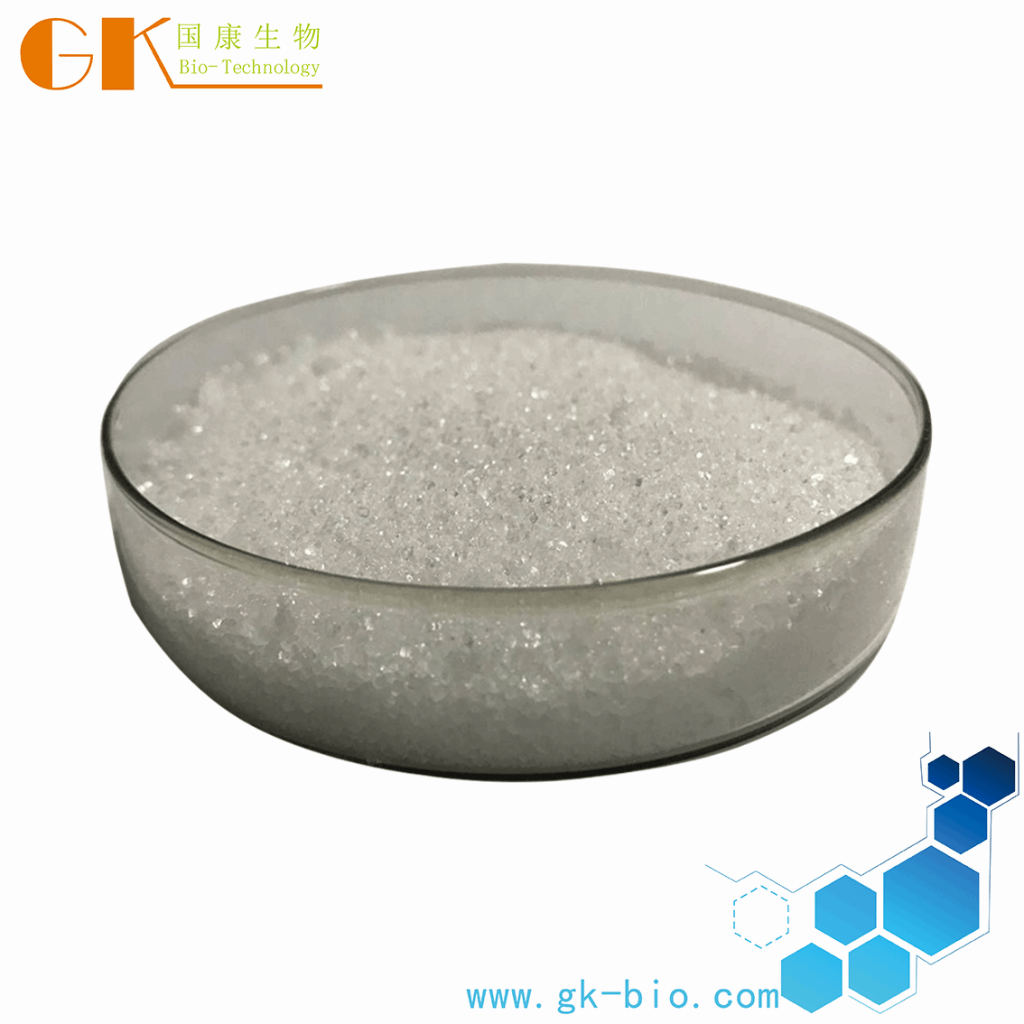
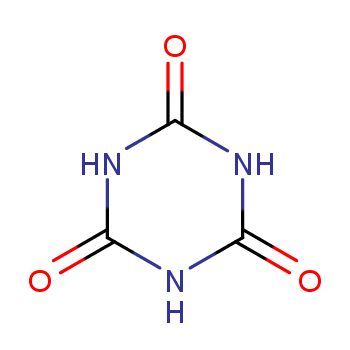
Cyanuric acid rose 11.11% to CNY 8,500/ton from CNY 7,650/ton, making it the largest genuine advance of the day. The product is newly tracked in this edition, so no prior reference exists to confirm the move, and the weekly change of minus 1.73% indicates that the level remains below where it sat a week ago — another sign that the step up should be read as a reference reset rather than as a sustained rally. Cyanuric acid is the core intermediate for chlorinated isocyanurate swimming-pool sanitisers and is also used in detergent formulations and herbicide synthesis. Northern-hemisphere pool demand is now seasonally declining, so buyers should treat CNY 8,500/ton as a benchmark to verify against supplier quotes rather than as evidence of a tightening market.
Basic chemicals saw
32 of 73 tracked products move, 17 higher and 15 lower. Setting aside the mineral-oil correction, the strongest gains were
Ammonium chloride up 4.32% to CNY 845/ton,
Ammonium sulfate up 3.46% to CNY 1,345/ton,
Dichloromethane up 3.24% to CNY 2,614/ton,
Hydrochloric acid up 2.73% to CNY 188/ton,
calcium carbide up 2.25% to CNY 2,730/ton,
Acetic acid up 1.98% to CNY 4,800/ton,
Toluene up 1.17% to CNY 8,650/ton and
PX up 1.02% to CNY 9,900/ton. Smaller advances came from
Borax up 0.62% to CNY 6,520/ton,
Formaldehyde up 0.57% to CNY 1,765/ton,
PET up 0.44% to CNY 8,746/ton,
Xylene up 0.39% to CNY 8,503/ton,
Acetic anhydride up 0.35% to CNY 7,183/ton,
Phosphoric Acid up 0.30% to CNY 8,375/ton,
Sulfur up 0.21% to CNY 7,752/ton and
Phenol up 0.15% to CNY 8,828/ton. Declines were led by
Copper sulfate down 7.74% to CNY 23,650/ton,
Propane down 5.69% to CNY 5,800/ton,
ethyl acetate down 3.60% to CNY 5,970/ton,
sulfuric acid down 1.61% to CNY 1,710/ton,
Cobalt down 1.24% to CNY 262,200/ton,
Hydrogen peroxide down 0.97% to CNY 713/ton and
Nickel down 0.86% to CNY 124,783/ton.
Methanol produced the most interesting divergence of the day. Spot benchmark material eased 0.33% to CNY 4,585/ton while the futures main contract closed 3.19% higher at CNY 3,336/ton after touching an intraday high of CNY 3,417, with volume of 2.92 million lots and open interest up 4.79% to 511,581 lots — a textbook pattern of new money entering an already tight market. The physical case remains exceptional: port inventories stood at 412,000 tons on September 23, down 11,900 tons on the week and 72.39% lower year on year, with East and South China port stocks at 347,500 tons on September 25, down 171,200 tons on the month and 920,600 tons on the year, and coastal freely available cargo estimated at only around 99,000 tons. Producer stocks were 265,200 tons, down 14,500 tons. Imports remain the binding constraint, with August arrivals of 805,300 tons against 992,100 tons in July and the January–August cumulative total down 32.30% year on year, while Iranian daily output has recovered only from 6,500 to about 21,000 tons, an operating rate near 65%. Offsetting this, domestic capacity utilisation has risen to 83.80% as maintenance ends, coal-to-olefins operating loads are up 4.26 percentage points to 77.61%, and the margin split is now extreme — upstream profitability at an absolute high and MTO margins at an absolute low. That combination is why spot stalled even as futures surged, and why most institutions describe the outlook as high-level, wide-range consolidation rather than a one-way move.
The acetic acid chain again led the gainers.
Acetic acid rose 1.98% to CNY 4,800/ton, lifting weekly and monthly gains to 3.75% and 30.10%, and the product is now more than 81% above year-earlier levels. Market reports show broad increases on September 28, with East China and Jiangsu up CNY 25/ton and Shandong up CNY 105/ton, Jiangsu Sopo quoting CNY 4,900/ton while running its three glacial acetic acid units below full rate, Guangdong mainstream negotiations at CNY 4,600–4,700/ton and Zhejiang self-collection material at around CNY 4,750/ton. The East China monthly average reached CNY 4,128/ton, up 32.97% month on month and 62.64% year on year, with the advance attributed to lower operating rates, thin producer inventories and firm seller sentiment rather than to a demand surge. Exports provide a second pillar: August shipments of around 117,800 tons left cumulative year-to-date volumes 24% higher year on year at average prices roughly 35% above last year, with about two thirds destined for India.
Acetic anhydride added 0.35% to CNY 7,183/ton with a 23.24% monthly gain, and
Formaldehyde rose 0.57% to CNY 1,765/ton, extending its monthly gain to 29.68% on methanol cost pass-through.
ethyl acetate remained the weak link, down 3.60% to CNY 5,970/ton with an 8.77% weekly decline, as solvent buyers continue to refuse further cost transmission.
Aromatics were mixed after Monday's sharp rally.
Toluene gained 1.17% to CNY 8,650/ton with a 3.64% weekly gain and a 20.08% monthly gain, and
PX added 1.02% to CNY 9,900/ton, while
Xylene rose 0.39% to CNY 8,503/ton and
Phenol edged up 0.15% to CNY 8,828/ton.
Benzene was the exception, easing 0.17% to CNY 10,084/ton after its 2.47% advance on September 28, which leaves it 2.75% higher on the week and 21.41% higher on the month — a pause rather than a reversal, with port and refinery inventories still low.
Propylene was unchanged at CNY 9,701/ton with a 2.46% weekly gain and a 12.93% monthly gain, and
Ethylene glycol slipped 0.21% to CNY 6,558/ton while retaining a 23.61% monthly advance. The pattern across the aromatics complex is one of digestion: the cost push from crude has been largely absorbed and further upside now requires restocking rather than headlines.
Fertilizer, chlor-alkali and inorganic salts provided most of the day's upward breadth.
Ammonium sulfate rose 3.46% to CNY 1,345/ton, taking its monthly gain to 7.40%, although major producer Hualu-Hengsheng held its ex-works quotes unchanged at CNY 1,320/ton for caprolactam-grade bulk and CNY 1,175/ton for power-plant grade, indicating that the benchmark move is being driven by smaller lots and export-linked demand rather than by the majors.
Ammonium chloride added 4.32% to CNY 845/ton despite a 2.47% weekly decline.
Hydrochloric acid rose 2.73% to CNY 188/ton and is now more than 143% above year-earlier levels, while
calcium carbide gained 2.25% to CNY 2,730/ton with an 8.18% monthly gain and
Dichloromethane added 3.24% to CNY 2,614/ton, up 10.63% on the month.
Caustic Soda was the only chlor-alkali decliner, down 0.31% to CNY 637/ton.
Urea eased 0.28% to CNY 1,780/ton, giving back part of Monday's rebound as autumn application winds down and daily output remains near 196,000 tons.
Metals and battery materials were the weakest group.
Copper sulfate fell 7.74% to CNY 23,650/ton, more than reversing Monday's 4.41% advance. The scale of the move is disproportionate to the underlying metal: Shanghai 1# electrolytic copper averaged CNY 110,920/ton, down only CNY 250/ton, the Shanghai futures main contract closed essentially flat at CNY 109,570 and three-month LME copper ended 1.05% lower at USD 14,478/ton. That gap indicates the sulfate quote had run ahead of the metal and is now being corrected, with domestic social stocks of refined copper edging up to 80,700 tons and pre-holiday restocking by cable and brass fabricators drawing to a close, which has pushed spot premiums lower. Supply risk remains live, with workers at Antofagasta's Centinela mine in Chile voting 98.73% in favour of strike action on a site that produced 240,400 tons in 2025. Further down the battery chain,
Lithium carbonate eased 0.81% to CNY 122,000/ton and
Cobalt fell 1.24% to CNY 262,200/ton; weekly industry data put lithium hydroxide down 9.27%, lithium carbonate down 8.22% and Shanghai cobalt down 7.58%, with lithium carbonate now 19.35% lower over the month as spodumene arrivals recover and cathode makers finish pre-holiday buying.
Nickel slipped 0.86% to CNY 124,783/ton.
Sulphur, peroxide and the remaining inorganics were mixed.
sulfuric acid fell 1.61% to CNY 1,710/ton, extending its monthly decline to 4.78%; market commentary attributes the sustained September slide to failed cost support, with acid plants across multiple regions cutting offers, transactions limited to low-priced essential orders, and producers running pre-holiday destocking promotions as terminal buyers show little interest in building cover.
Sulfur edged up 0.21% to CNY 7,752/ton but remains 13.19% lower over the month.
Hydrogen peroxide slipped 0.97% to CNY 713/ton after a strong month in which the national average rose from CNY 623/ton at the start of September to CNY 713/ton, a 14.44% gain driven by pulp bleaching demand in the traditional peak season, lithium iron phosphate oxidant offtake and municipal water treatment, rather than by raw-material costs. Traders caution that hydrogen peroxide has a short storage life and buyers do not stockpile, which makes the rally pulse-like and prone to quick retracement; new capacity from Fujian Kemeite Gas added supply in September.
Sodium fluoride fell 0.89% to CNY 4,113/ton,
Potassium carbonate declined 0.67% to CNY 7,450/ton and
Sodium metabisulfite eased 0.18% to CNY 3,910/ton.
A long list of large-volume basic chemicals was completely unchanged, including
Propylene at CNY 9,701/ton,
Ethylene Oxide at CNY 9,700/ton with a 17.92% monthly gain,
Aniline at CNY 14,600/ton,
Acetone at CNY 8,738/ton with a 28.12% monthly gain,
Formic acid at CNY 2,050/ton,
Ethanol at CNY 5,601/ton,
Propylene glycol at CNY 9,100/ton,
Titanium dioxide at CNY 14,220/ton,
Calcium chloride at CNY 1,413/ton,
Sodium hydroxide at CNY 2,567/ton,
White phosphorus at CNY 27,766/ton,
Pyridine at CNY 18,471/ton and
EVA at CNY 11,033/ton. Two returning lines are worth noting:
Mineral oil at CNY 72,000/ton and
kerosene at CNY 8,200/ton. Newly tracked items including
Acetonitrile at CNY 8,625/ton with an 8.49% weekly gain,
Benzoic acid at CNY 8,800/ton with a 14.35% monthly gain,
Ethylene at CNY 8,500/ton,
Silicon at CNY 9,550/ton,
Sulfur hexafluoride at CNY 28,100/ton and
Poly(vinyl alcohol) at CNY 10,400/ton all opened flat. Overall, the Basic Chemicals segment is now clearly in a
hold-and-verify phase: cost push from methanol and crude is being absorbed unevenly, downstream buyers have finished holiday stocking, and the next genuine direction will come from the Hormuz negotiations rather than from domestic fundamentals.
Fine Chemicals were the quietest segment, with only
7 of 46 products moving, 4 higher and 3 lower, and the group now spans 46 lines after another substantial expansion. Aside from
Tetrahydrofuran down 11.96% to CNY 17,167/ton and
Cyanuric acid up 11.11% to CNY 8,500/ton, the movers were
Trichloroethylene down 5.54% to CNY 4,314/ton,
Melamine up 0.40% to CNY 6,325/ton,
Imidazole up 0.38% to CNY 21,750/ton and
Sodium metabisulfite down 0.18% to CNY 3,910/ton. The most striking underlying statistic in the group remains
dimethyl carbonate, unchanged at CNY 6,233/ton but still up 40.85% over the month, the largest monthly gain anywhere in the tracked basket, even though it is 6.73% lower over the week.
Trichloroethylene fell 5.54% to CNY 4,314/ton, a second consecutive decline that pushes its weekly loss to 10.36% and leaves it 0.70% lower over the month. Unlike Monday's move, this one appears to be a genuine drift rather than a reference reset: the product has now settled below the level at which it entered the basket, and both of its main outlets — metal degreasing and vapour cleaning, and hydrofluorocarbon feedstock — are in steady rather than expanding demand.
Cyanuric acid, discussed above, remains the largest genuine gainer.
Melamine rose 0.40% to CNY 6,325/ton with weekly and monthly gains of 0.43%, still supported by firm urea and coal costs but capped by modest laminate, tableware and resin demand.
Imidazole added 0.38% to CNY 21,750/ton with a 0.52% weekly gain, and
Sodium metabisulfite eased 0.18% to CNY 3,910/ton, tracking the continued softness in sulphur costs.
The large majority of the segment was entirely unchanged, which is typical for contract-priced speciality and ingredient lines.
Citric acid held at CNY 6,200/ton,
Lactic acid at CNY 8,163/ton with a 0.62% weekly gain,
Hydroquinone at CNY 30,500/ton,
Oleic acid at CNY 10,000/ton,
glycolic acid at CNY 13,000/ton,
Ferric chloride at CNY 2,808/ton,
Sodium hypochlorite at CNY 553/ton,
Water softener salt at CNY 967/ton,
Dimethyl sulfoxide at CNY 10,850/ton and
Potassium sorbate at CNY 15,100/ton, the latter still showing a 24.72% monthly gain despite a 20.61% weekly decline that reflects its recent re-basing. Newly tracked speciality and ingredient lines all opened flat, including
Sodium alginate at CNY 130,000/ton,
azelaic acid at CNY 80,000/ton,
Trichloroacetic acid at CNY 40,000/ton,
Magnesium glycinate at CNY 29,000/ton,
Stearic acid at CNY 28,000/ton,
Benzyl alcohol at CNY 18,500/ton,
Lauric acid at CNY 18,500/ton,
Mannitol at CNY 18,000/ton,
Sodium polyacrylate at CNY 18,000/ton,
Sodium dodecyl sulfate at CNY 14,850/ton with a 45.59% weekly gain,
Xanthan gum at CNY 21,000/ton,
Guar gum at CNY 15,500/ton,
Castor oil at CNY 14,500/ton,
Palladium at CNY 11,500/ton,
Quartz at CNY 6,800/ton,
Cocamidopropyl betaine at CNY 6,000/ton,
Activated carbon at CNY 4,200/ton,
Silver iodide at CNY 1,804/kg with a 16.69% weekly gain,
tranexamic acid at CNY 330/ton,
Melatonin at CNY 850/kg and
Alkaline Phosphatase at CNY 20,000/ton. The two large weekly figures on sodium dodecyl sulfate and silver iodide are opening-level effects and should be treated with the same caution as the other new lines.
Taken together, the Fine Chemicals segment confirms that today's volatility was again concentrated in bulk and energy-linked chains rather than in speciality ingredients. Only trichloroethylene and melamine among the movers reflect ordinary spot adjustments. For buyers, the practical implication is that speciality ingredient pricing is stable heading into the holiday, and that dimethyl carbonate — despite its 40.85% monthly gain and 6.73% weekly setback — remains the one product in the group where timing materially matters.
Energy, Rubber, Plastic and other chemicals Prices
Energy, Rubber, Plastic and other chemicals saw
6 of 13 products move, 5 higher and 1 lower.
WTI Crude Oil rose 1.09% to USD 93/barrel in the tracked basket,
ABS gained 0.74% to CNY 11,250/ton,
Gasoline added 0.46% to CNY 10,358/ton,
Asphalt rose 0.29% to CNY 6,253/ton and
Carbon edged up 0.27% to CNY 12,467/ton, while
Carbon Black fell 0.85% to CNY 11,693/ton.
Anthracite at CNY 1,750/ton,
Silica at CNY 6,400/ton,
HDPE at CNY 10,563/ton,
kerosene at CNY 8,200/ton,
Basalt at CNY 650/ton,
Poly(vinyl acetate) at CNY 12/kg and
anaerobic bacteria at CNY 50/kg were all unchanged. The segment is now the clearest expression of the split between crude-linked products tracking geopolitics and coal- or rubber-linked products tracking domestic demand.
WTI Crude Oil was recorded at USD 93/barrel, up 1.09%, but the futures tape was far more volatile than that number suggests. After rising roughly 3% on Monday when President Trump rejected Iran's seven-day Hormuz proposal, benchmarks reversed on Tuesday as reports emerged that Tehran had agreed to suspend uranium enrichment in exchange for sanctions relief and Qatari mediators prepared separate talks in New York with both parties on a revised plan. November WTI settled USD 3.22 lower at USD 89.38, a fall of 3.48%, with Brent at USD 102.59, down 2.56%. Two cross-currents explain why prices remain high despite the diplomatic noise. On the supply side, Kpler preliminary data put Middle East crude exports at 12.8 million barrels per day in September, the highest since the conflict began in February, yet flows through Hormuz remain far below pre-war levels. On the product side, the White House is weighing both an easing of rules to expand red diesel sales and a possible diesel export ban, which has pushed the Brent premium over WTI to its widest since May on expectations that United States refiners would cut runs if exports were blocked. The tracked product remains 15.85% higher over the month.
Refined products and asphalt continued to hold their gains.
Gasoline rose 0.46% to CNY 10,358/ton, lifting weekly and monthly gains to 1.93% and 14.16%, supported by reduced refinery runs, low product inventories and pre-holiday travel demand ahead of the National Day break.
Asphalt added 0.29% to CNY 6,253/ton, holding a 30.64% monthly gain — the second-largest monthly advance in the entire basket — as refinery production plans stay below normal and producer and social inventories remain at multi-year lows.
Anthracite was unchanged at CNY 1,750/ton with a 1.45% weekly gain and a 0.82% monthly loss, confirming that the coal complex has fully absorbed the earlier policy-driven supply-guarantee push and is no longer reacting to energy headlines.
kerosene, back in the basket, was flat at CNY 8,200/ton.
Polymers firmed on cost pass-through while rubber chemicals softened again.
ABS rose 0.74% to CNY 11,250/ton with weekly and monthly gains of 1.82% and 13.74%, tracking styrene and butadiene higher, while
HDPE held at CNY 10,563/ton with a 2.70% monthly gain and
Poly(vinyl acetate) was unchanged at CNY 12/kg.
Carbon Black was the only decliner, falling 0.85% to CNY 11,693/ton and extending its weekly loss to 3.16%, even as it retains a 30.97% monthly gain, the largest in the segment. The product continues to be squeezed from both sides: high-temperature coal tar still represents 65%–80% of production cost, while tyre makers are cutting utilisation, with Chinese semi-steel tyre sample capacity utilisation at 65.17%, down 0.54 percentage points on the week and 7.57 percentage points on the year, and all-steel at 61.52%, down 3.28 percentage points on the week.
Silica held at CNY 6,400/ton with a 3.53% monthly gain, and
Carbon added 0.27% to CNY 12,467/ton.
Overall, the Energy, Rubber, Plastic and other chemicals segment is defined by
crude tracking diplomacy while refined products, asphalt and polymers run on their own physical tightness. The Hormuz file remains the dominant variable and now cuts both ways: a negotiated reopening would unwind the risk premium quickly, while a breakdown would restore it just as fast. Domestic counter-cyclical policy signals and the traditional peak season provide a floor, but with tyre makers cutting runs and holiday stocking finished, demand is not currently driving anything. With mainland markets closed for most of next week, the first post-holiday session will set the tone for October, and both the methanol port-inventory situation and the Hormuz negotiations will be the deciding inputs.
Data Source & Update Methodology
The above pricing data is compiled from multiple market channels including domestic ex-works quotations, distributor transaction references, port prices, and mainstream spot market assessments. Data was updated on
September 29, 2026, based on the latest available trading activity and real-time market feedback collected by GuideTrends analysts and industry participants.
All prices are for reference purposes only and may vary depending on region, transaction volume, specification, and contract terms.
Explore More Chemical Price Data
Access Real-Time Chemical Market Intelligence
For real-time price updates, historical trend analysis, and detailed market insights covering thousands of chemical products, visit the
GuideTrends Database .
Track chemical prices, compare product specifications, monitor supply chain movements, and identify sourcing opportunities with professional market intelligence tools designed for global chemical buyers and suppliers.



 EN
EN
 Agricultural News
 Food News
 Industrial News
 Cosmetic News
 Pharmaceutical News
 Science News

 3YRS
3YRS

